“Isen Mulang” — a Dayak phrase meaning “never give up” — embodies the spirit of resilience that runs deep in the cultural roots of the Dayak people. It’s more than just a motto; it’s a way of life that speaks to their enduring connection with the land, their traditions, and each other.
This spirit takes vibrant form each year during the “Isen Mulang Festival” in Palangka Raya, Central Kalimantan. Surrounded by dense rainforest, the city becomes a living stage for Dayak heritage, with week-long festivities that include traditional dances, music, culinary competitions, parades, and river races. The festival isn’t just a celebration — it’s a declaration of identity and strength.
At a time when many indigenous cultures are fading, the Dayak people of Borneo are holding on. But they are not just preserving their traditions — they are evolving them. The younger generation is finding ways to keep their identity alive in a changing world, blending old wisdom with new realities. Their culture is not about nostalgia; it’s about survival, pride, and continuity. It is a resilient force that strengthens the human-nature connection.
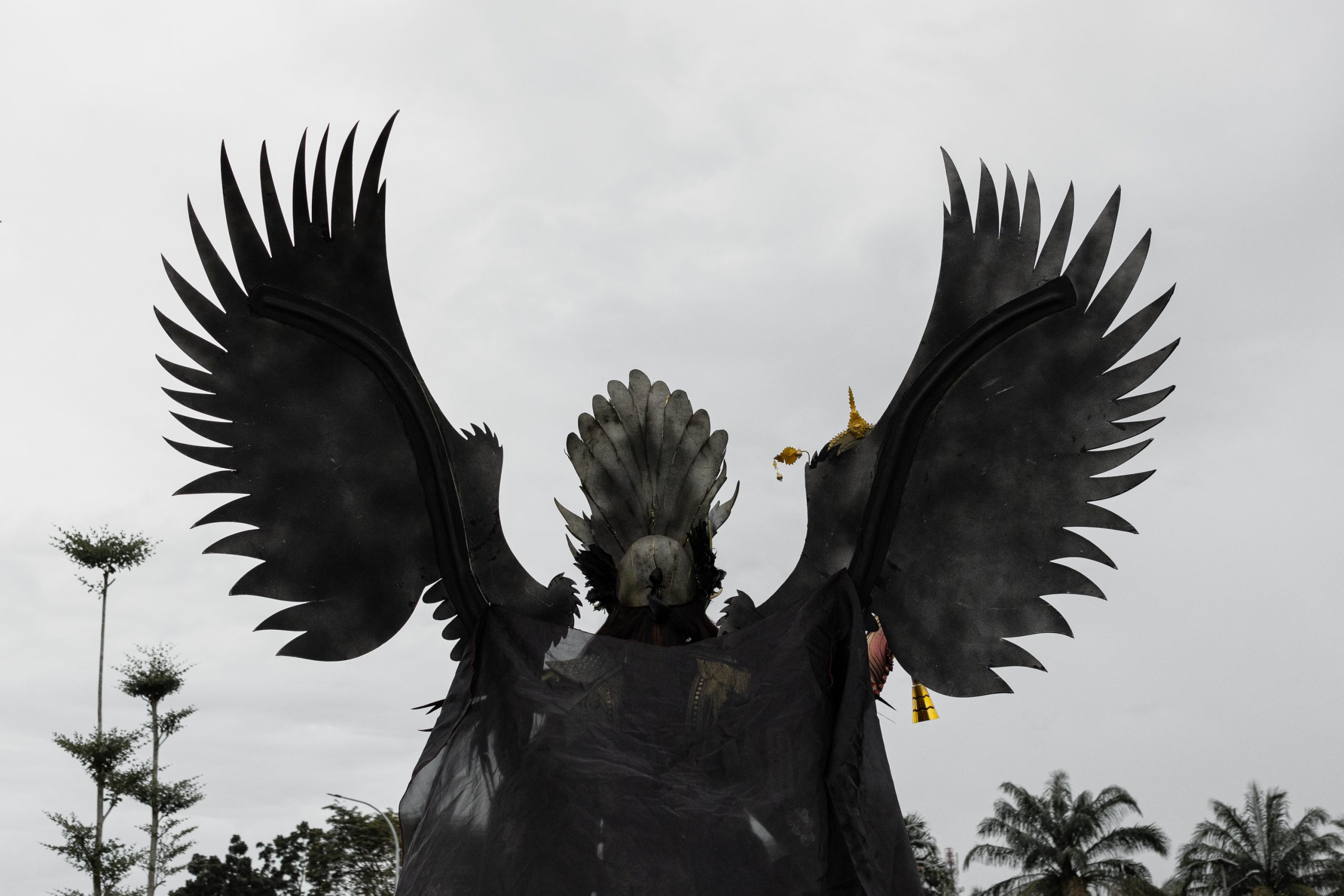
“Hornbill”
The hornbill is one of the most important and sacred animals in Dayak culture across Borneo. It’s seen as messenger between the human world and the spiritual world. In Iban Dayak mythology, the hornbill represents the God of war, who grants protection, victory, and guidance in battle.
Sandy, 19 y.o., law student, native Dayak.
Palangka Raya, Central Kalimantan, Indonesia
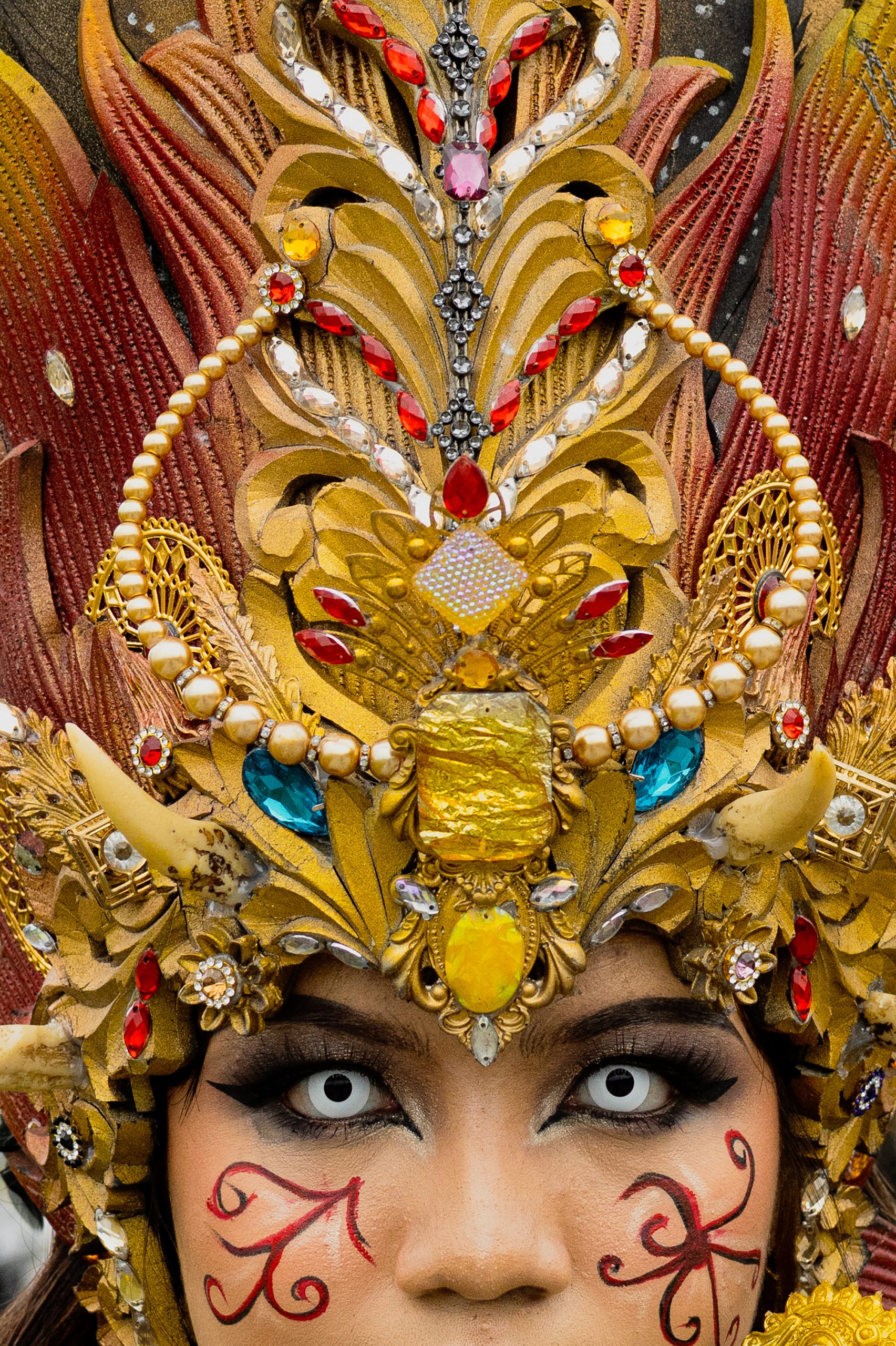
“Hornbill portrait”
The hornbill is a totemic animal for many Dayak groups. Its presence is a good omen, often symbolizing blessings from ancestors or deities.
Sandy, 19 y.o., law student, native Dayak.
Palangka Raya, Central Kalimantan, Indonesia
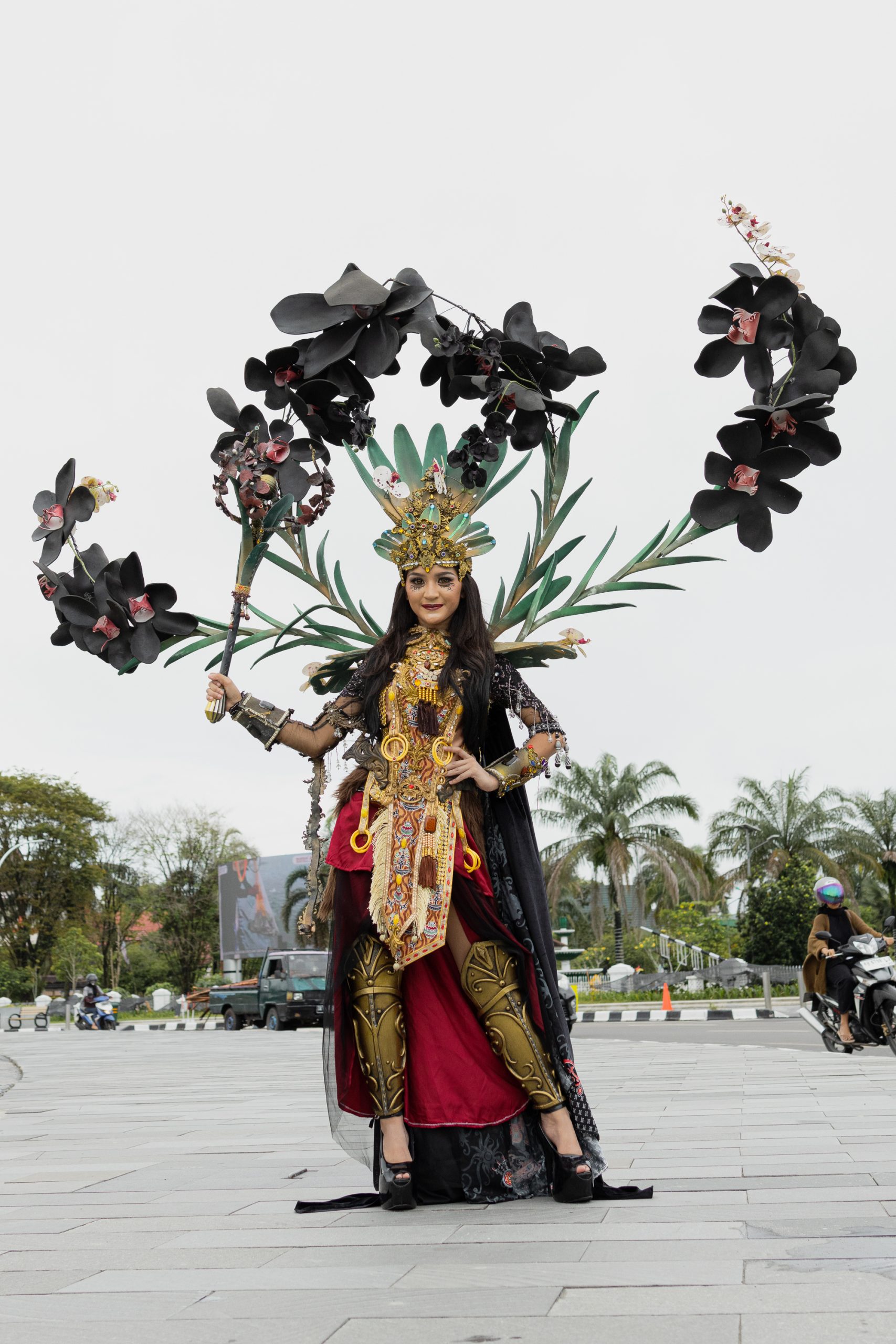
"Black Orchid"
Orchids are part of the natural flora that define landscape aesthetics for many Dayak communities. In art, tourism, batik patterns, botanical gardens in Borneo, orchids are featured as a part of cultural identity.
Keisha, 18 y.o., high school graduate, native Dayak.
Palangka Raya, Central Kalimantan, Indonesia
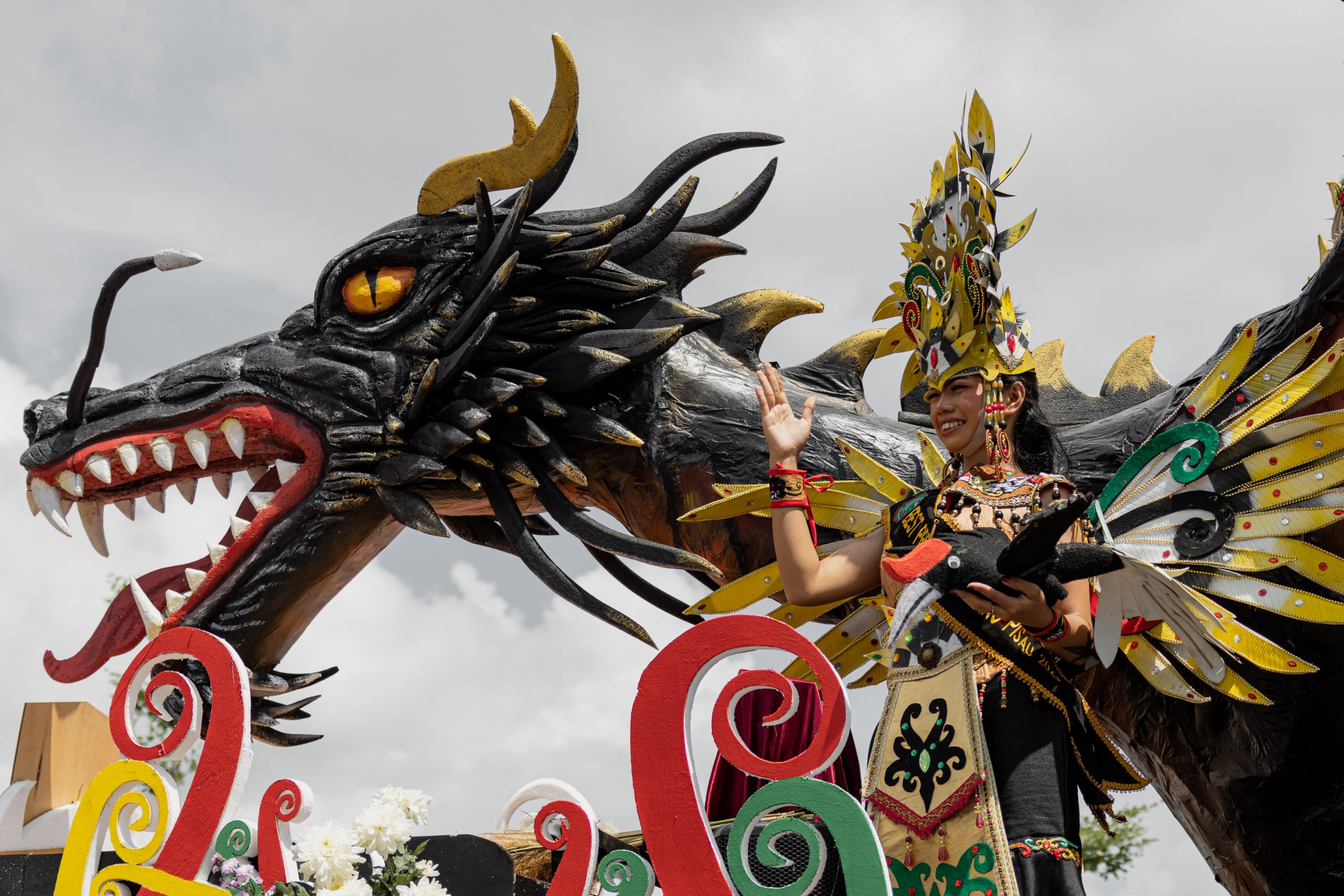
“Naga and sunbird”
Dayak symbols of cosmic balance. The dragon (“Naga” according to Ngaju Dayak mythology) represents the underworld and water element, while the hornbill represents the upper world and sky element. Together they symbolize the balance of the cosmos – above abd below, life and death, fertility and destruction.
Palangka Raya, Central Kalimantan, Indonesia
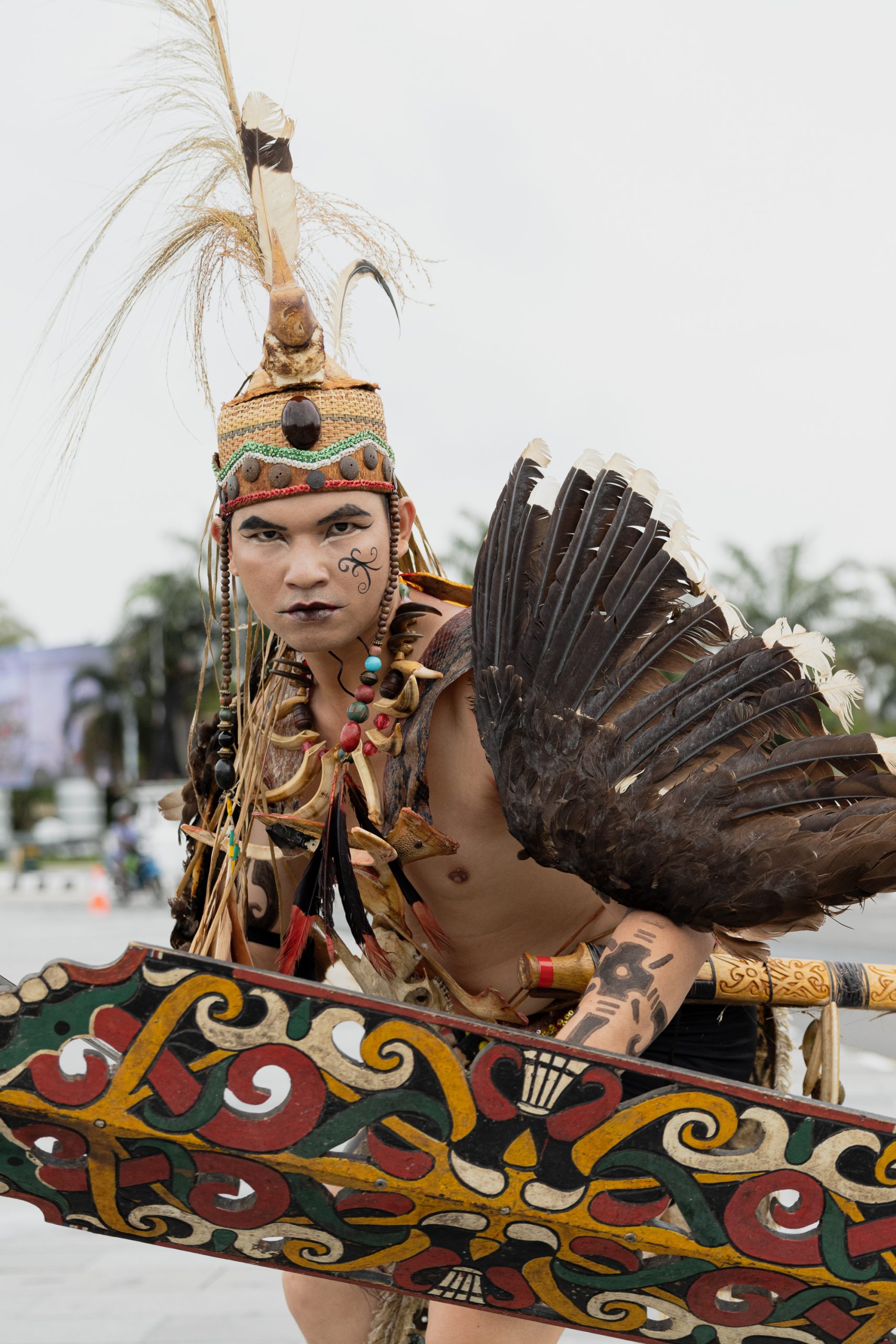
“Warrior”
Traditional attire of Dayak warrior with shield, feathers, and hornbill beak. Beyond physical defense Dayak shields are believed to provide spiritual protection from enemy spirits, curses, and unsee danger. While feathers represent spiritual armor, status, and cosmic connectors, reflecting both the warrior’s courage and the community’s beliefs about harmony with nature and the spirit world. The beak signify bravery, leadership, and high rank in the community.
Indra 37 y.o., notary, native Dayak.
Palangka Raya, Central Kalimantan, Indonesia
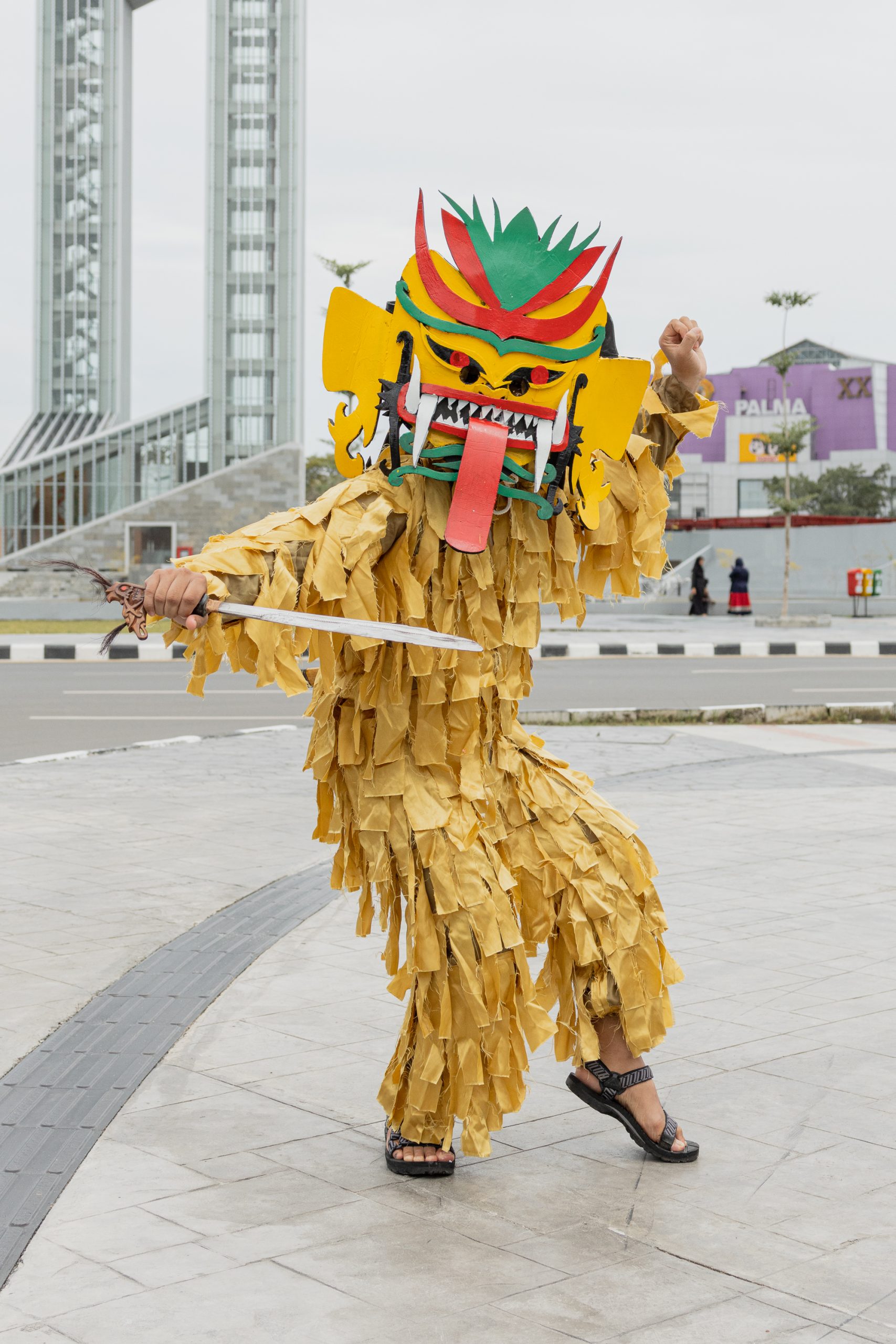
“Babukung”
The Babukung is a traditional mask and ceremonial attire from the Maanyan Dayak people of Central Kalimantan. It is closely tied to death rituals and ancestor ceremonies, especially the Tiwah ritual, which is the secondary burial ceremony to release the soul of the deceased to the afterlife.
Hefi, 22 y.o., sociology student, native Dayak.
Palangka Raya, Central Kalimantan, Indonesia
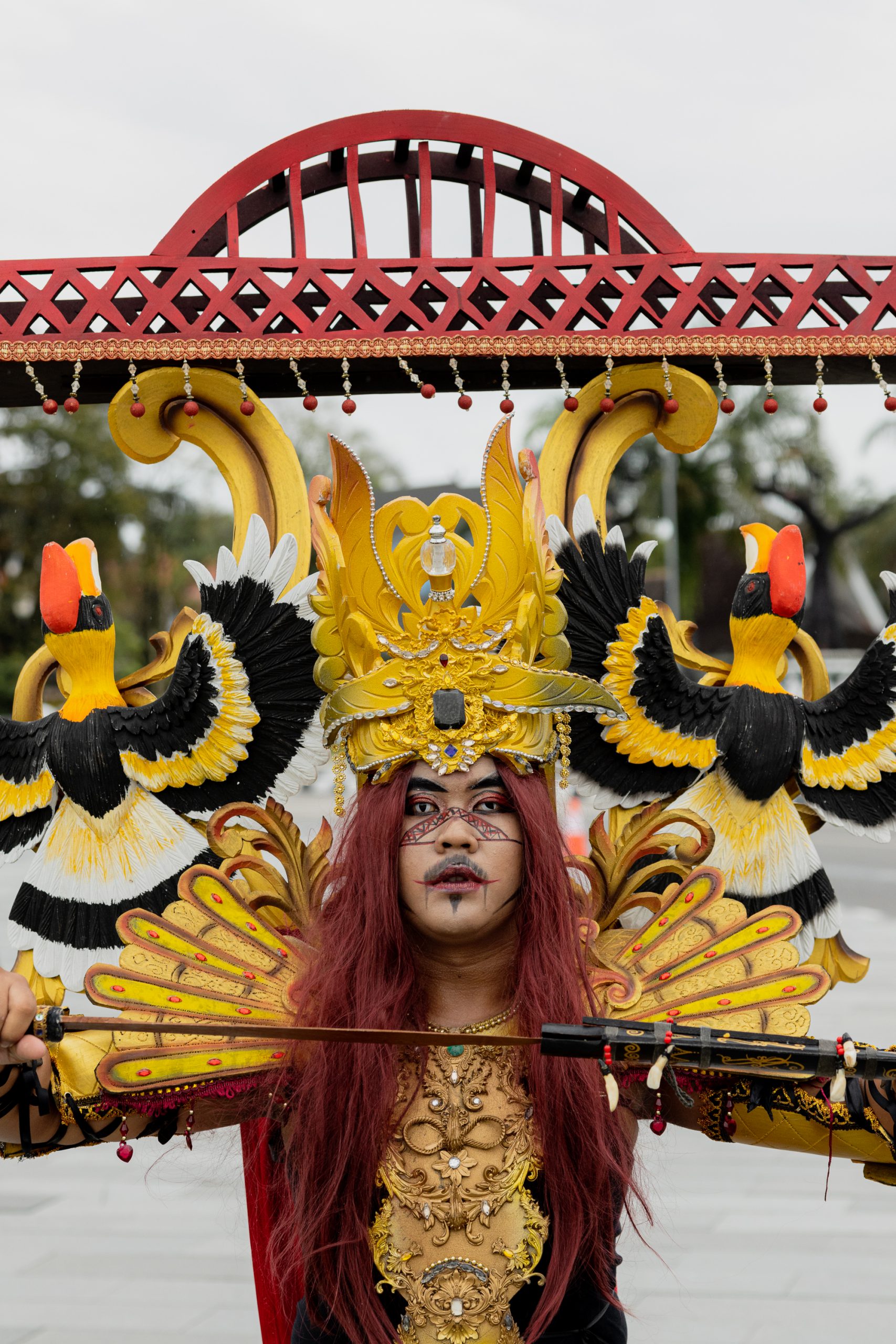
“Kahayan Bridge”
Landmark bridge in Palangka Raya, the capital of Central Kalimantan.
Riski, 23 y.o., notary employee, native Dayak.
Palangka Raya, Central Kalimantan, Indonesia
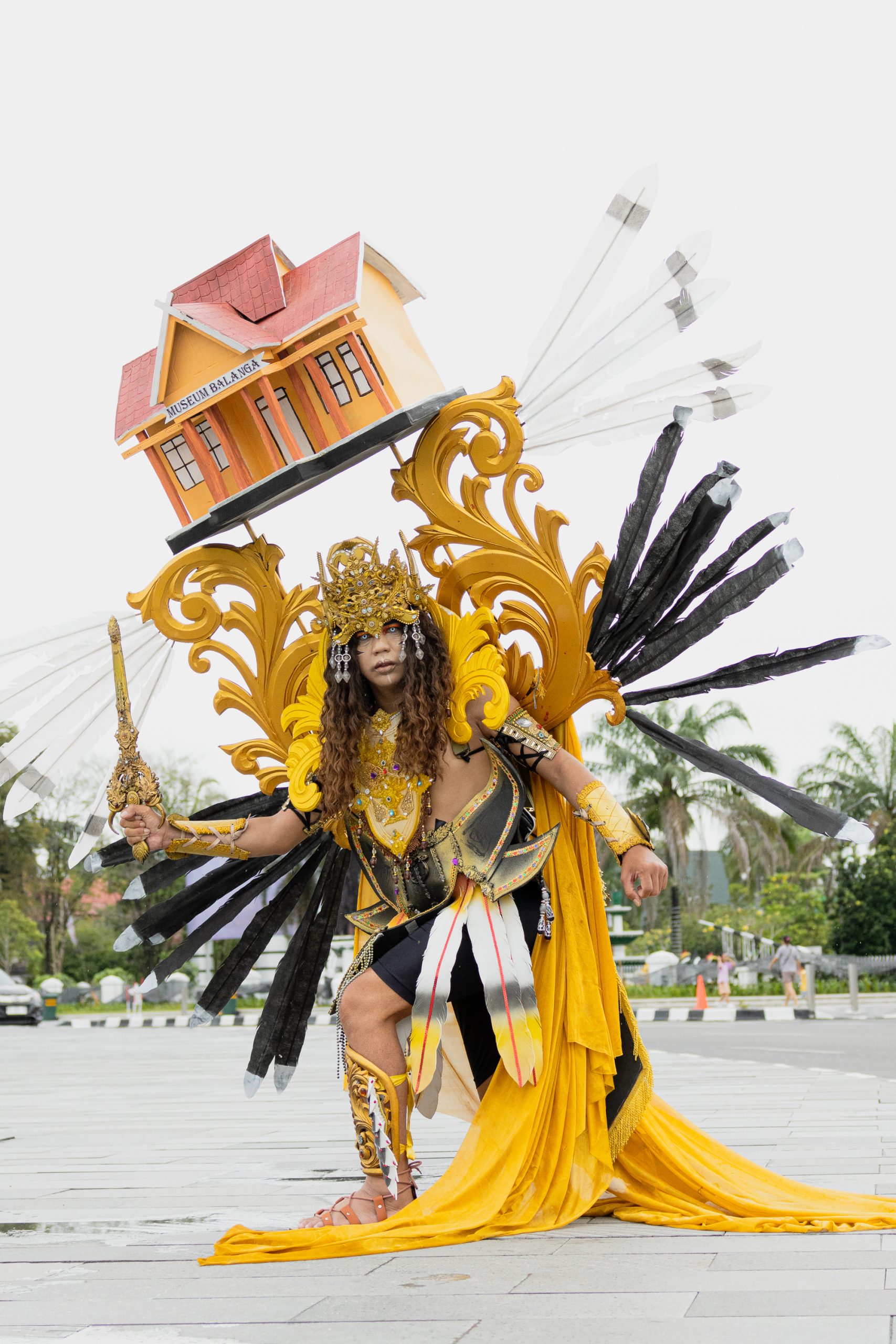
“Museum Balanga”
Museum of Palangka Raya, focused on the cultural, historical, ethnographic, and natural heritage of the Dayak people.
Aher, 30 y.o., modeling coach and owner of costumes’ gallery, native Dayak.
Palangka Raya, Central Kalimantan, Indonesia
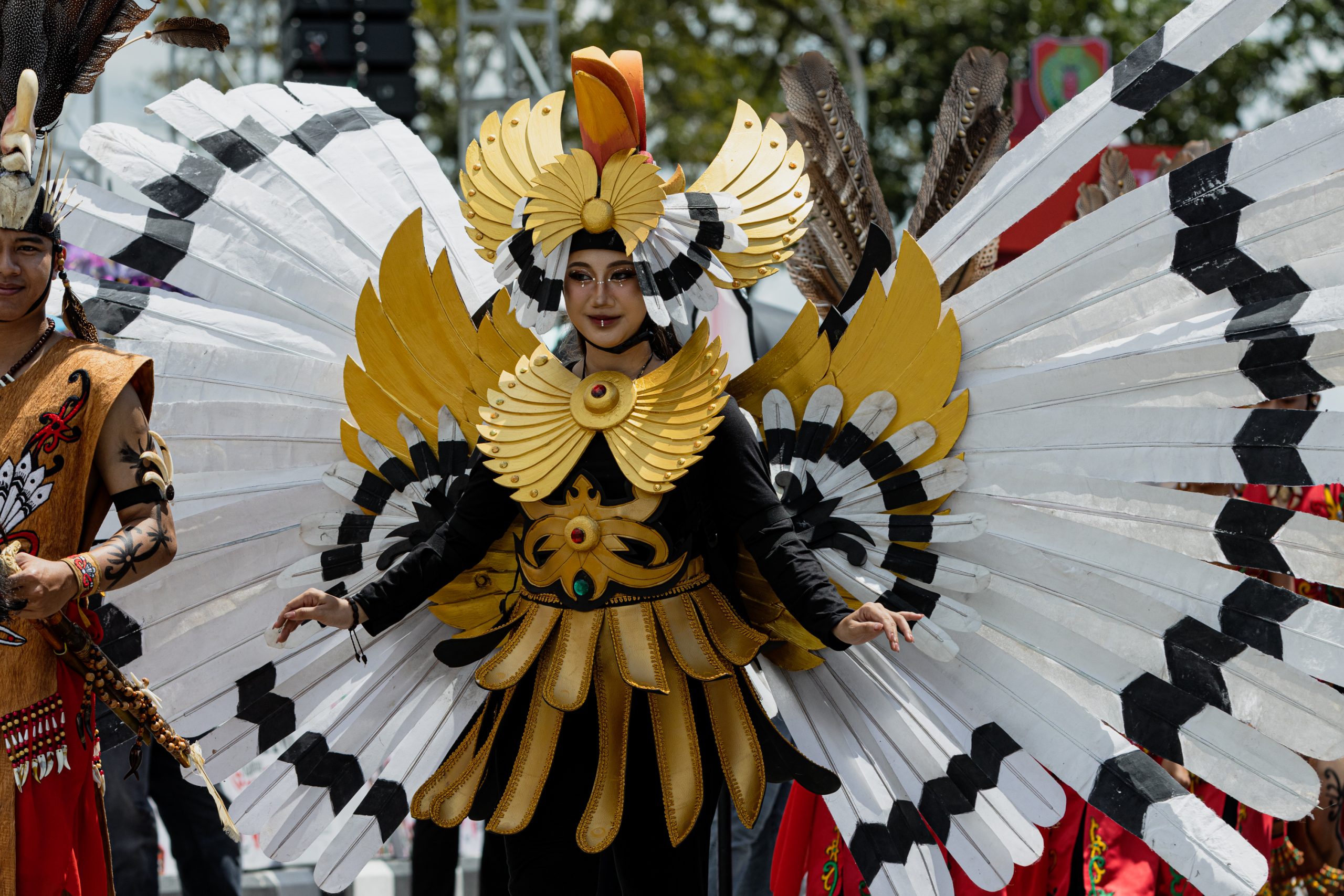
“Hornbill”
The hornbill has significant role in rituals and festivals. During Gawai Dayak (harvest festival) and other ceremonies, hornbill imagery is carved, painted, or danced to invite prosperity and protection. The Hornbill Dance is well-known ritual dance that imitates the bird’s movements and is performed to honor spirits and ancestors.
Palangka Raya, Central Kalimantan, Indonesia
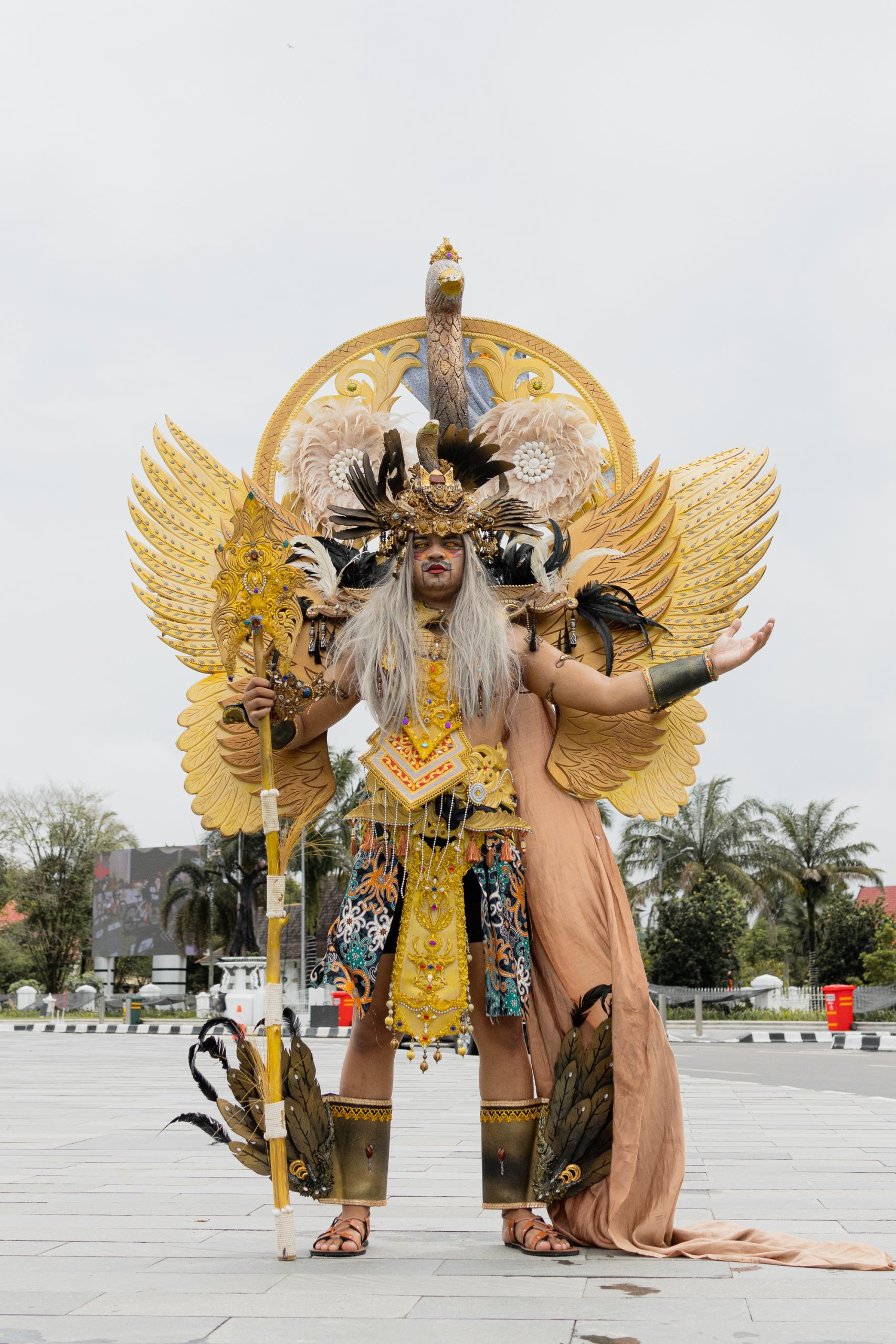
“Bebek”
Duck – common animal in Kalimantan villages. Among Dayak people it’s mostly tied to daily life and food traditions.
Syahrul, 23 y.o., university graduate in management, native Dayak.
Palangka Raya, Central Kalimantan, Indonesia
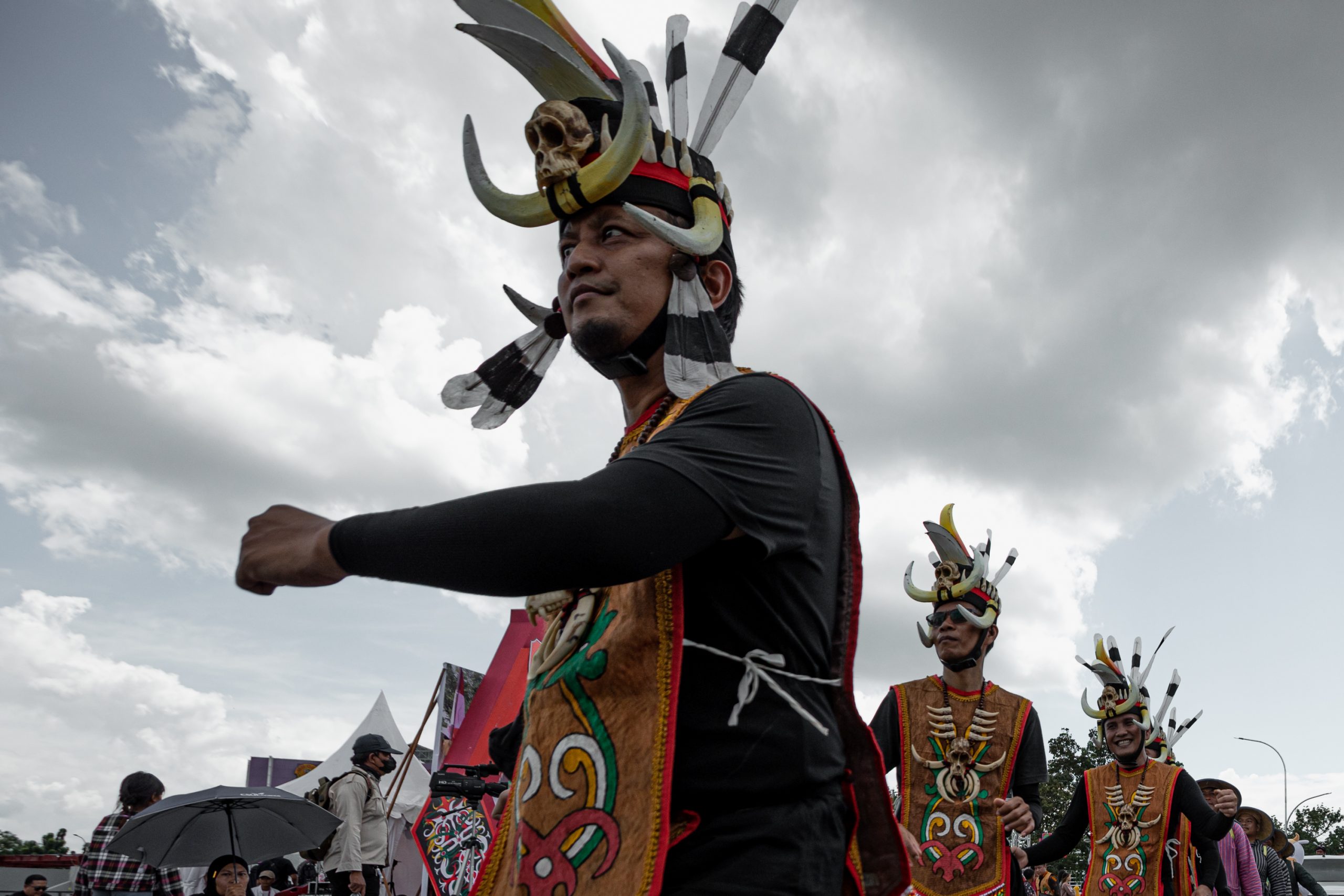
Dayak people
Procession of Dayak communities during “Isen Mulang” Festival. It is the biggest cultural festival in Central Kalimantan. It brings together all Dayak sub-ethnic groups (Ngaju, Maanyan, Ot Danum, etc).
Palangka Raya, Central Kalimantan, Indonesia