It’s called « pasung », the shackling of people with psychosocial disabilities. This archaic practice, illegal in Indonesia since 1977, remains prevalent in rural Java. While limited access to healthcare, and lack of infrastructure are factors, the primary reason remains the stigma of mental illness ingrained in Indonesian society. Fear of social disgrace, animistic beliefs and ancestral traditions lead families to healers who often practice faith-based rituals and herbal remedies. Privately run rehabilitation centers operate with no governance or accountability, staffed by individuals without formal training, including former patients. Conditions are abhorrent. Residents are caged in overcrowded filthy spaces, sometimes outdoors, forced to eat, sleep, and defecate within the limits of their chains and cells. Some separate men and women, others do not. Some administer medical treatment including injections of antipsychotic drugs and shock therapy with little oversight. The physical and psychological repercussions are severe with widespread infections, malnutrition, and physical and emotional trauma.
The United Nations Convention on the Rights of Persons with Disabilities stipulates that those suffering from mental illness have the fundamental right to health services. The reality is that Indonesia suffers from limited infrastructure and entrenched cultural beliefs. In particularly underserved rural areas, private centers fill the void without legal and ethical safeguards. Compounding deficient public services, mental illness is widely viewed as a spiritual or moral failing rather than a medical condition leaving many people without help or proper treatment because of the shame it can bring upon the family.
Efforts to end pasung in Indonesia are growing. The Indonesia Bebas Pasung (Free from Shackles) program has liberated many, linking release with treatment. Mobile clinics bring psychiatric care to remote villages, while local health workers support families before crises escalate. Survivor groups, cooperatives, and training programs aid reintegration, and religious leaders are transforming fear of mental illness into understanding.
Progress is fragile and the challenges remain immense. But these initiatives demonstrate that pasung is not inevitable. In its place, a more humane future is possible, one where images of suffering are not the end of the story but the beginning of change.
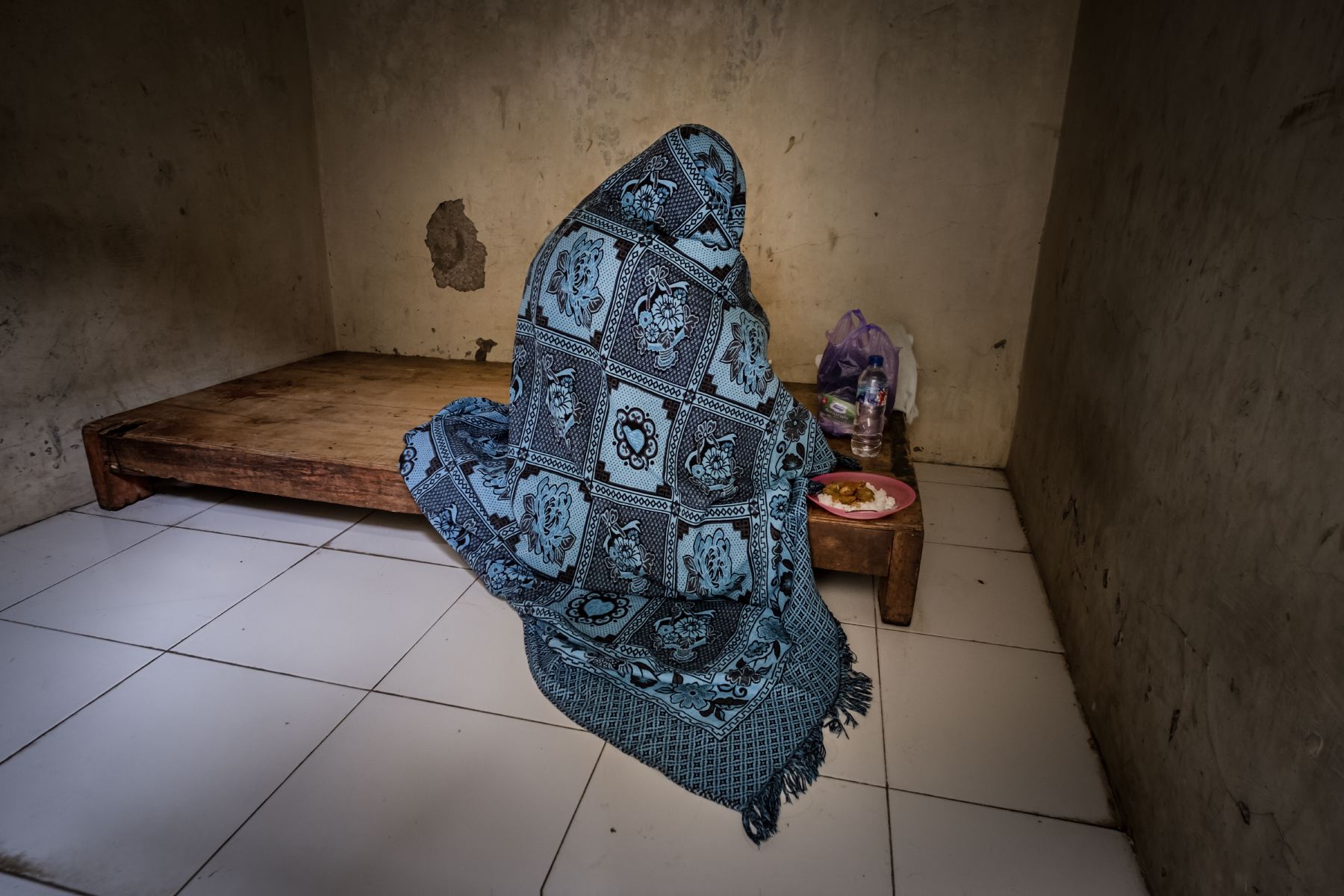
Chains of Madness 01
Indonesia, Java Island,
An unknown young woman wrapped in a blanket in a small cell at a rehabilitation center in Central Java. Minutes after I took this picture, she was taken away against her will and placed in the trunk of an SUV. Her mother was waiting for her, and within seconds they disappeared, leaving me with no answers. From my experience, observed on two different occasions, families bring their relatives to this kind of facility when they can no longer manage their behavior. According to the center’s manager, exorcism with Quranic prayers is an important part of the therapy.
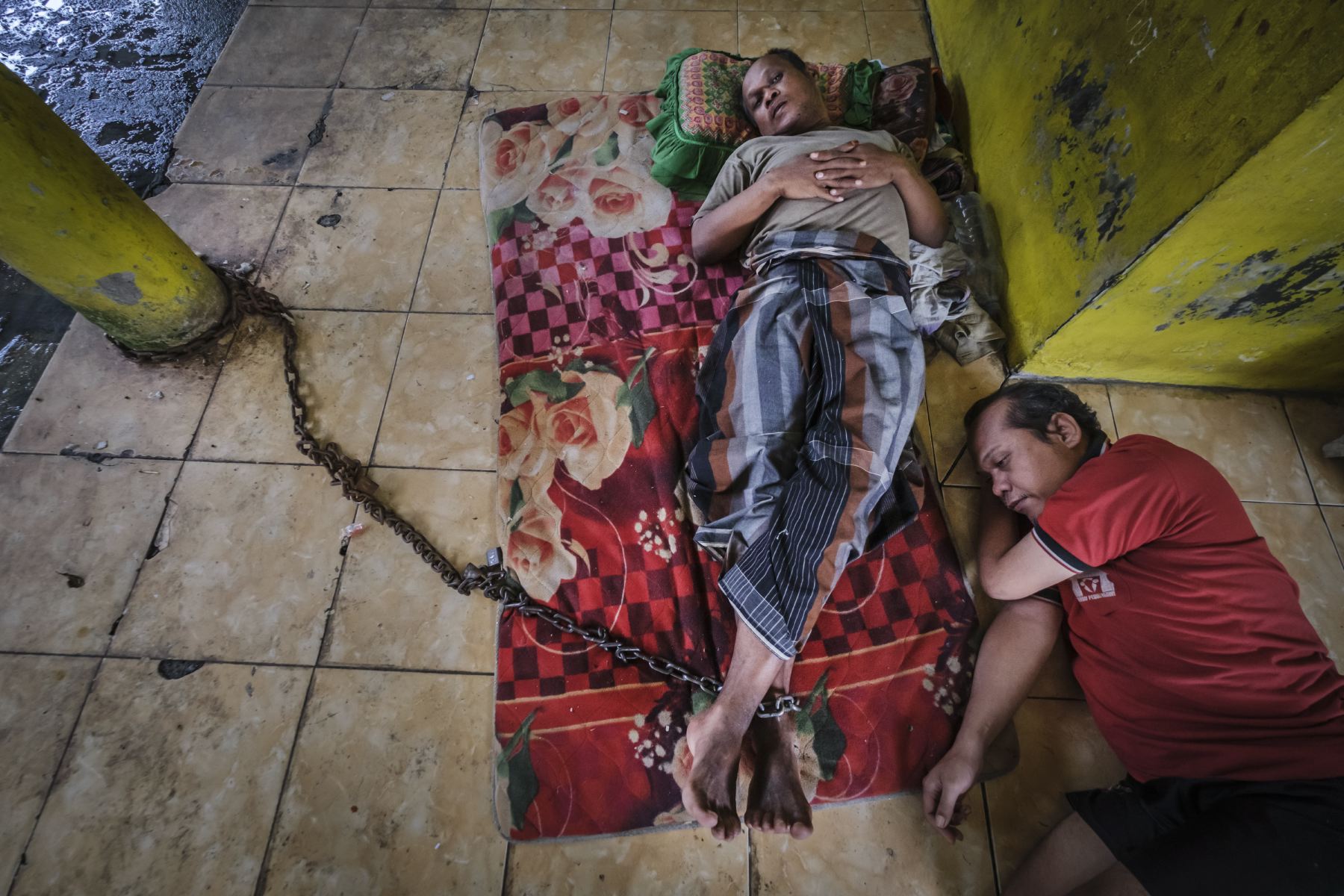
Chains of Madness 02
Indonesia, Java Island,
S. (56) is sleeping on the ground, chained to a column. He used to be an entrepreneur but says he was haunted by black magic from head to toe, attacked and bitten by ghosts, and left with pain all over his body. He has many secrets, and when he shares them, people make fun of him. He insists he’s not crazy and that the injections he receives don’t do anything, but the pain is gone, and he believes he’s almost cured. With a sense of pride, he tells me he’s shackled because he has tried to escape three times.
The man sleeping next to him is P. (46). He tells me he raped a woman and feels bad about it, but says he apologized, paid a fine of 15 million rupiah, and spent three months in prison. He was transferred to this center two months ago.
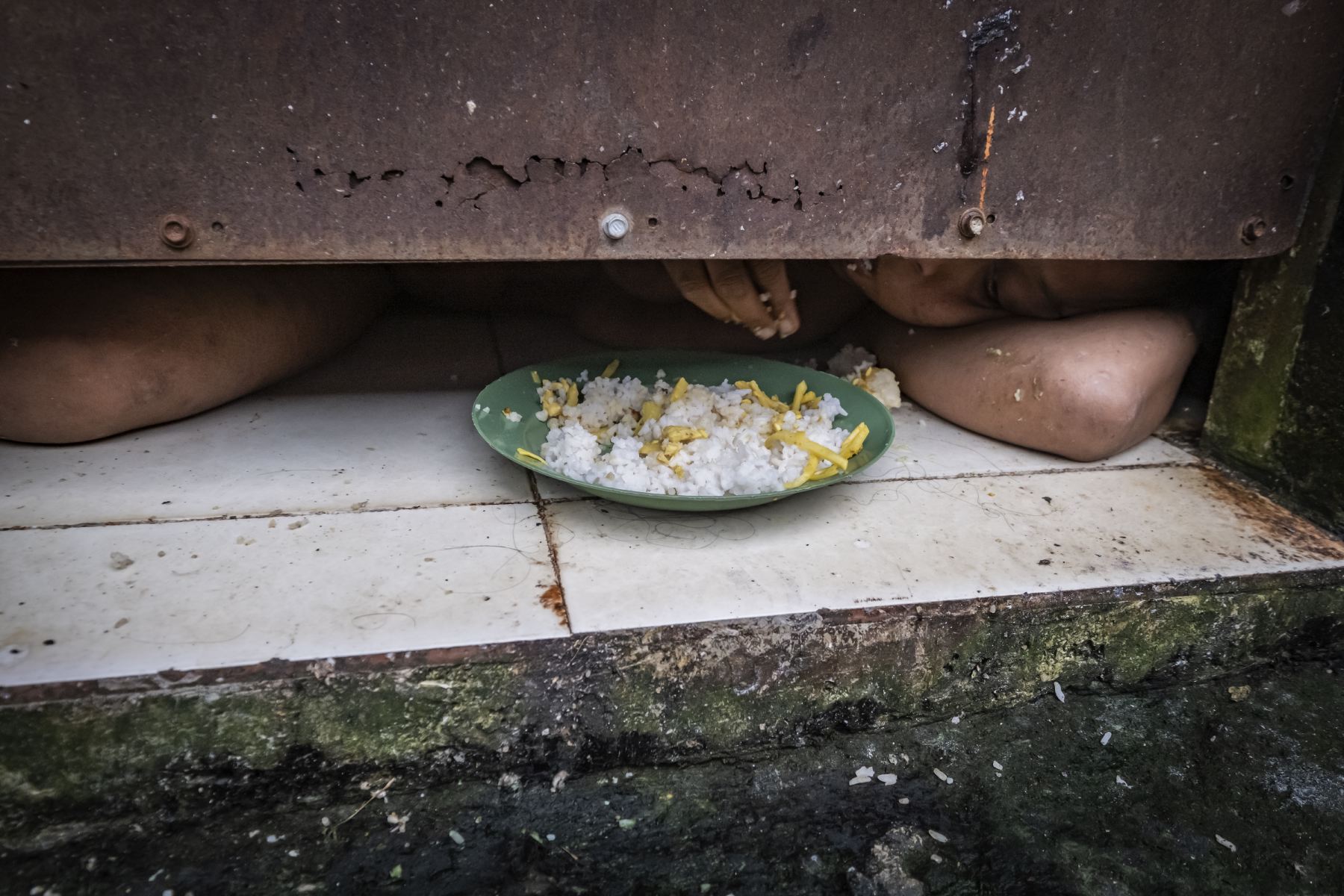
Chains of Madness 03
Indonesia, Java Island,
U. (34) – she says she was born in 1991 – is eating off the floor in her cell. According to the caretaker, she likes to be naked all the time and sleeps on the cold tiles to cool off. She has been here for eight years but when I ask her, she tells me she has been here for 41 years. Every time I talk to her she gives me a different name. She refuses to leave the cell and when she wants to wash, she is hosed down through the bars with cold water.
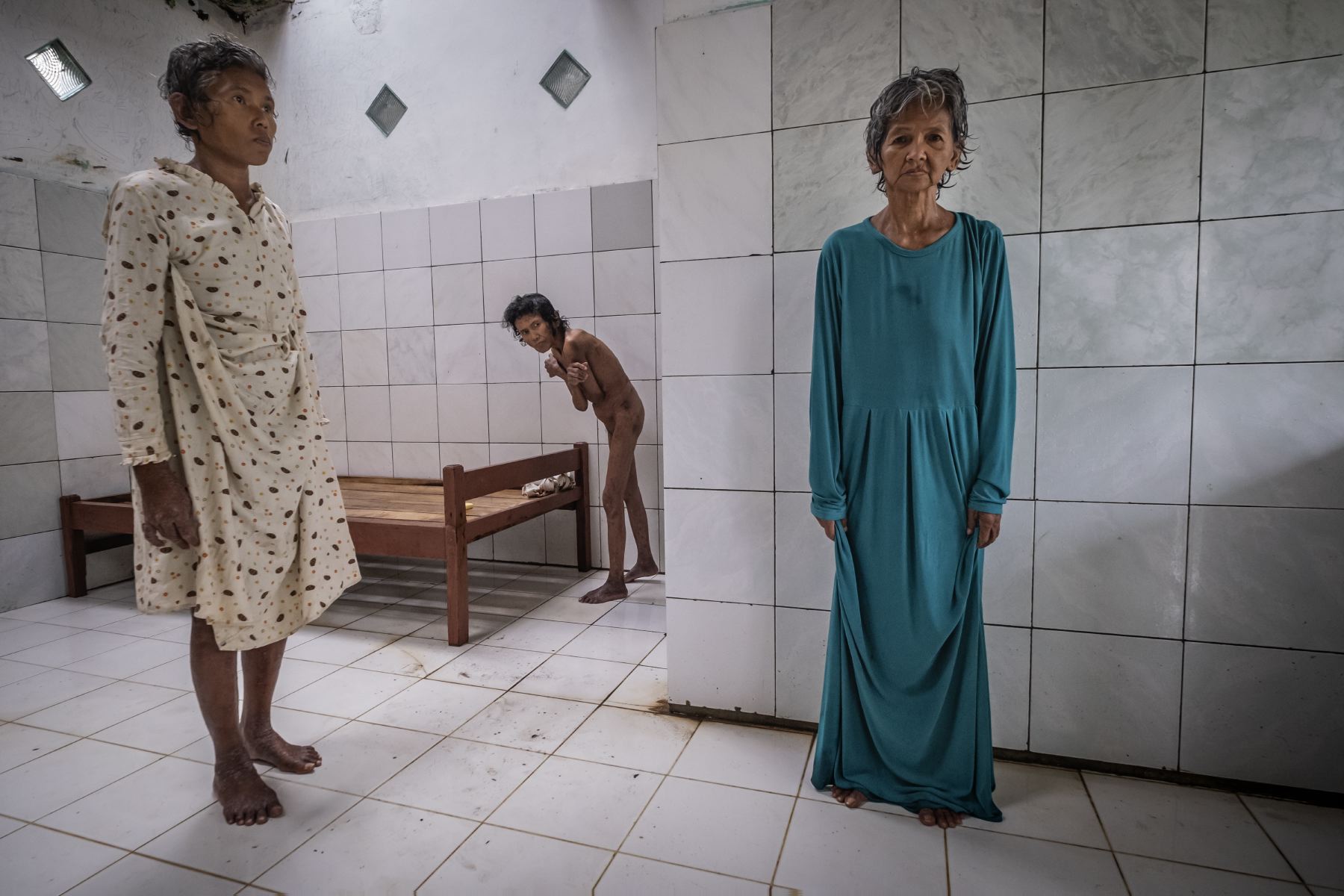
Chains of Madness 04
Indonesia, Java Island,
R. (70), standing on the right in the cell, is wearing a long turquoise dress. She has been here for ten years but does not know why. “Someone from my family brought me here,” she says. On the left, S. (38), wearing a white dress, arrived five years ago. Her son also spent a year with her here, but he is now healed and works as a farmer for the center. The three women in the picture were given a shower by a man, a former patient who now works at the center.
Chains of Madness 05
Indonesia, Java Island,
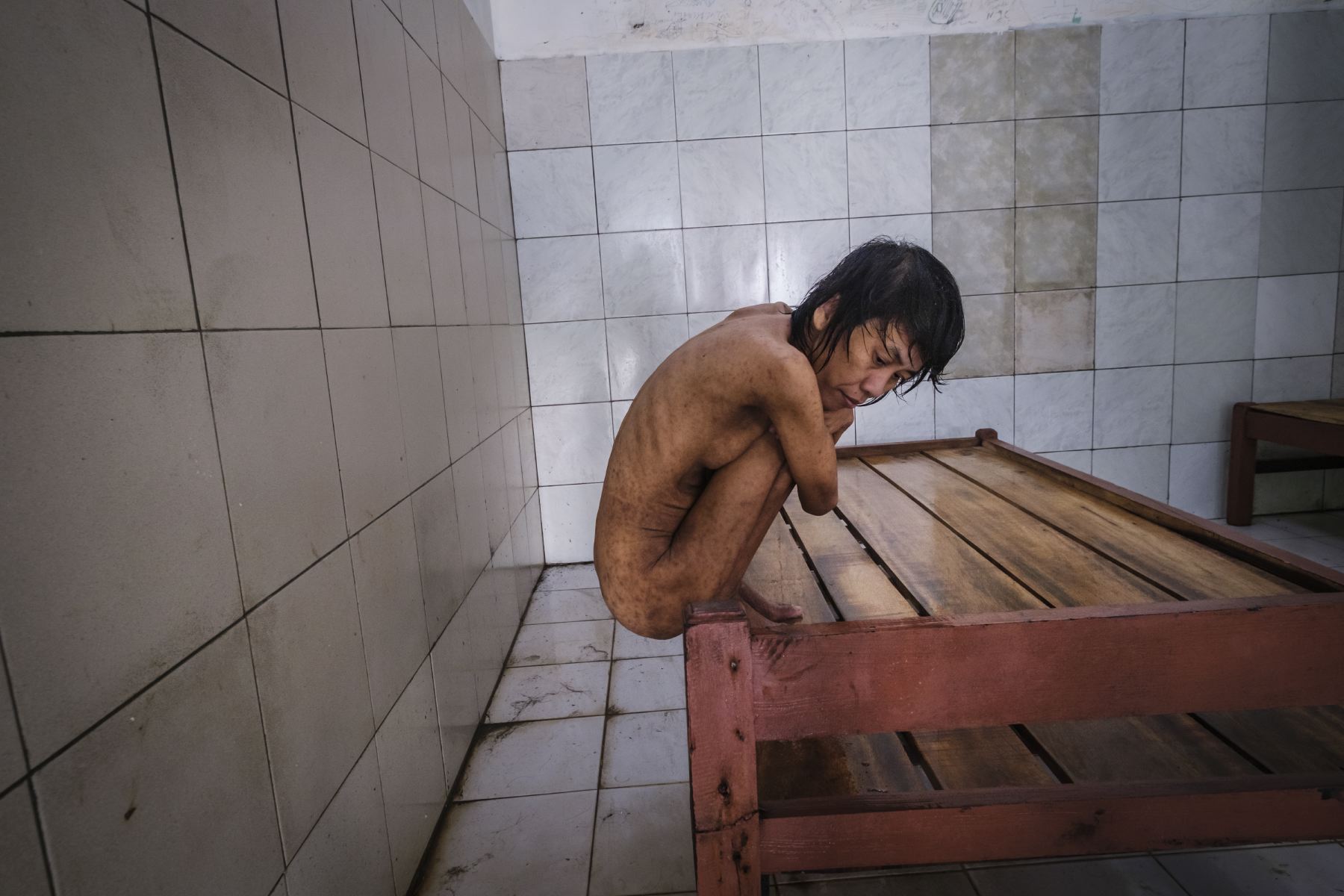
N. a young patient at a rehabilitation center, says she is 11 years old. It is impossible to talk to her as she is constantly singing or shouting and does not listen or answer. When she speaks, her language is utterly incomprehensible. She sings and dances gracefully around the cell. At the end of her performance, she makes birdlike wing movements with her arms, then perches herself on the edge of her wooden bed lost in her thoughts.
Chains of Madness 06
Indonesia, Java Island,
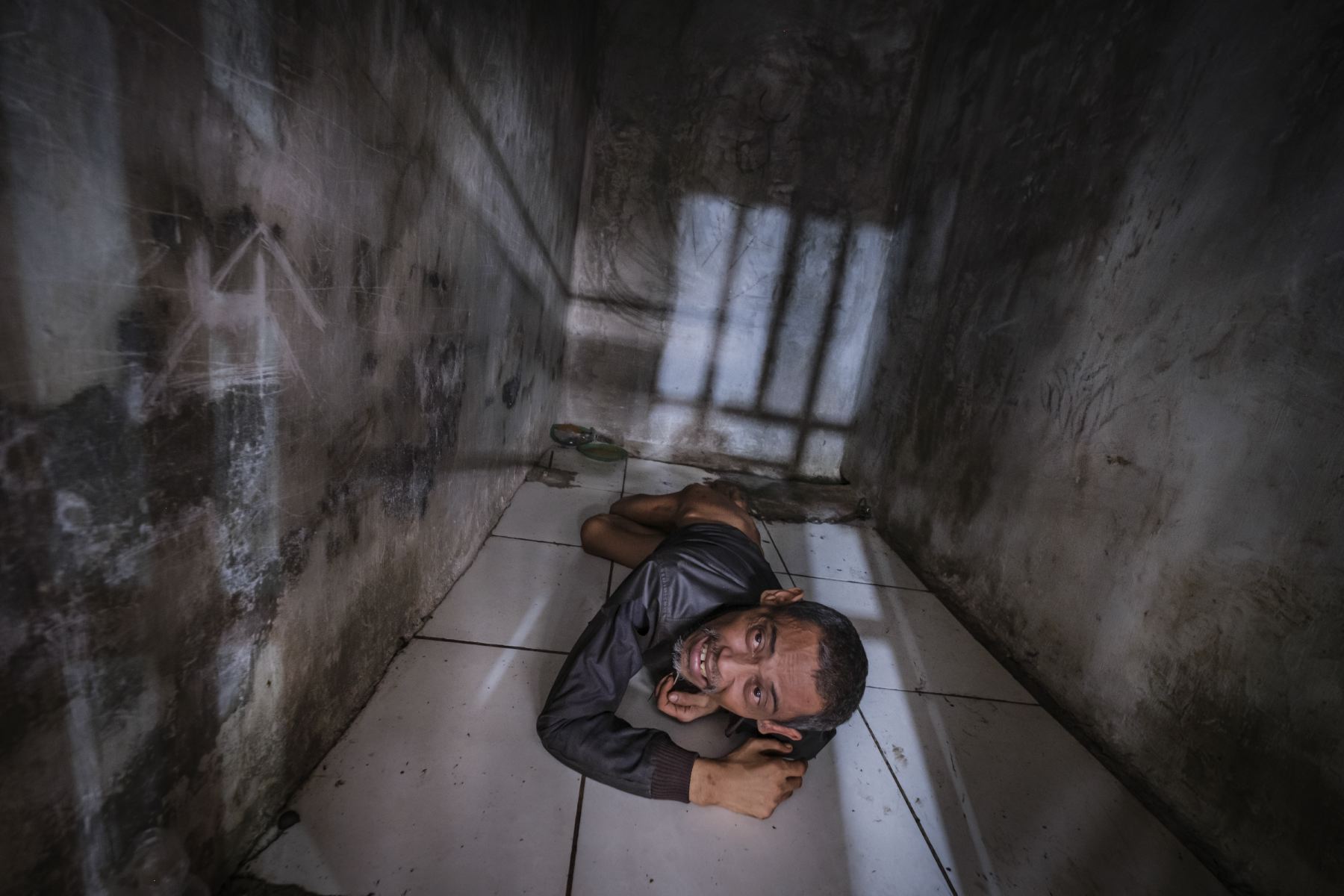
S. (45) has been here for four years. When I first visited three months ago, he was shackled in a solitary cell and was very violent, throwing things like his towel or plate at visitors and caregivers. Now, he is shackled in a smaller cell with very limited light. He is calmer but still shouts and cries most of the time. It is impossible to interview him or even talk to him. A caretaker tells me he was in the military and suffers from PTSD.
Chains of Madness 07
Indonesia, Java Island,
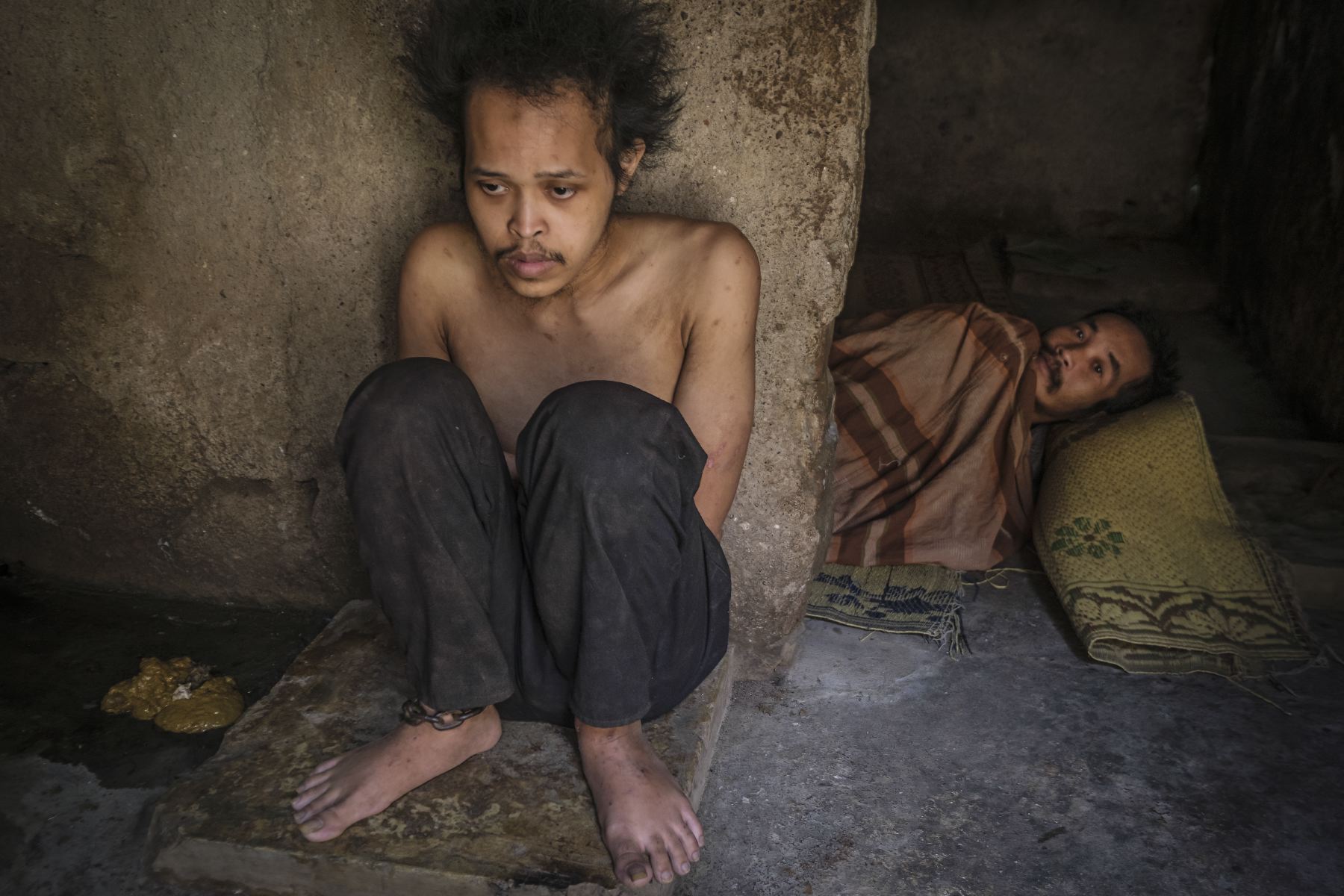
This is one of the worst places I visited during my reportage. Every resident in this center is shackled, forced to eat, sleep, and defecate within the limits of their chains. Food is scarce, and every meal is the same: rice, cassava, and tempeh.
M. does not know his age, but he tells me life is better here. He glances at me briefly before turning away.
Behind him, under a blanket, is H. He says he is 14 and has been at the center for three months because he is “crazy.” He says they are helping him here and that he has made many friends. At the end of the interview, he tells me he was born in 1986, which would make him 39.
Chains of Madness 08
Indonesia, Java Island,
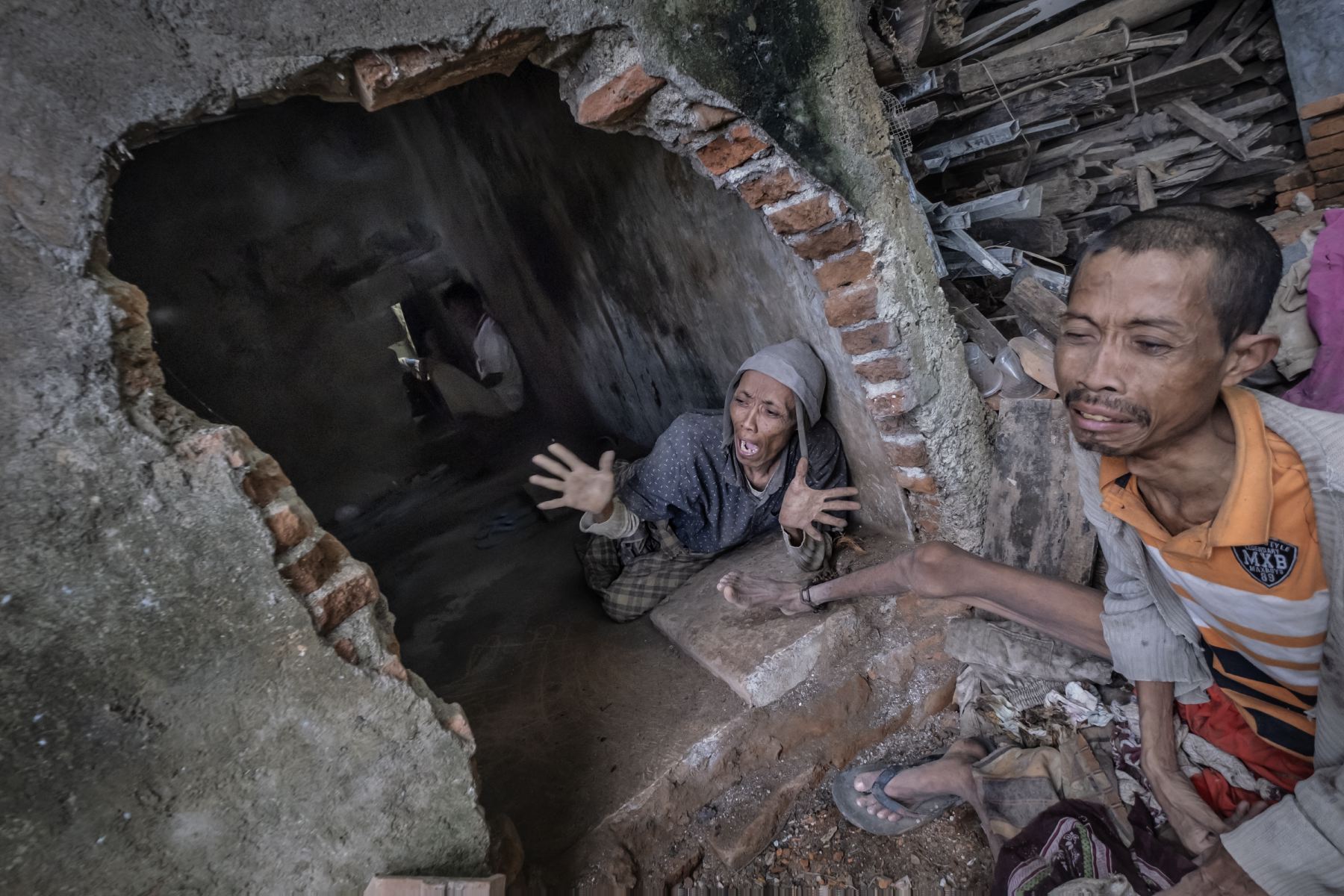
This is one of the worst places I visited during my reportage. Every resident in this center is shackled, forced to eat, sleep, and defecate within the limits of their chains. Food is scarce, and every meal is the same: rice, cassava, and tempeh. S. (54) on the left with the hood has been here for eight months. S. (23) years old has been here for three years. They plead for cigarettes, food and help.
Chains of Madness 09
Indonesia, Java Island,
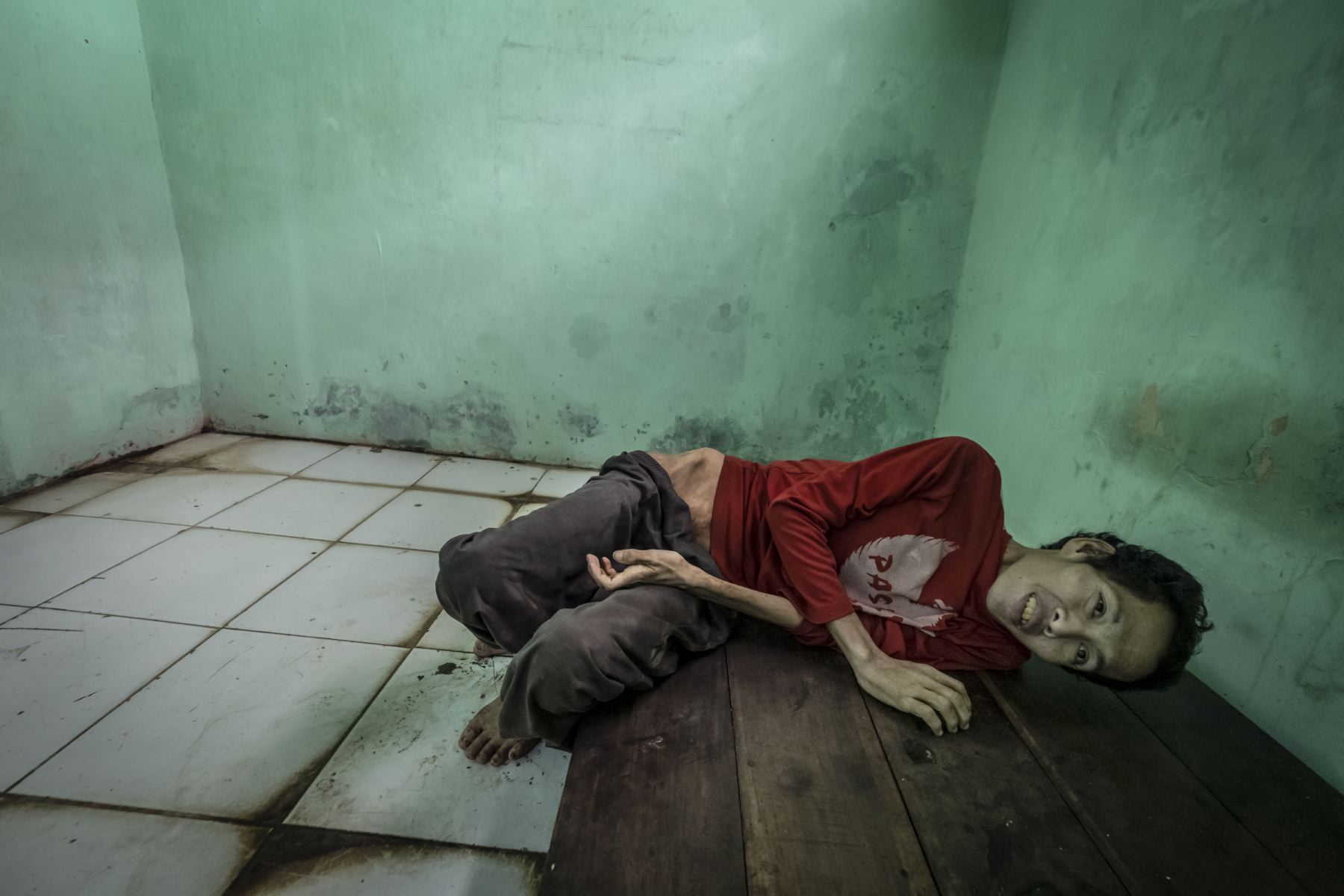
I. 25 years old, is chained to a wooden bed. He is so weak that he cannot stand. He was brought to this rehabilitation center in Central Java by the police after a roundup. Often, people forgotten by their families and by society wander the streets, half-naked and malnourished, until they are picked up by the police or social services and taken to facilities like this one.
Chains of Madness 10
Indonesia, Java Island,
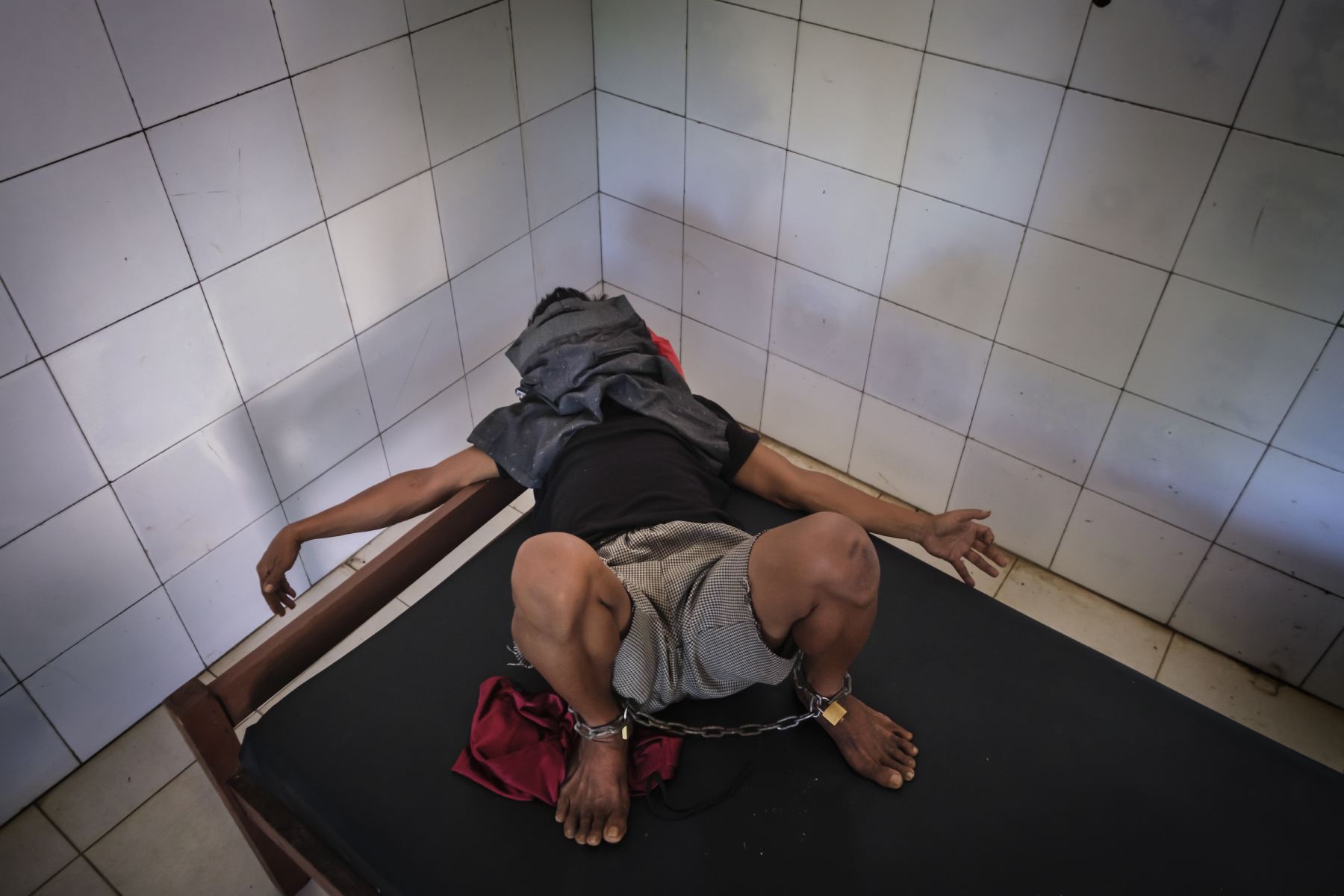
S. around 40 years old, lies with his feet shackled and arms extended like a cross on the hardwood bed in his cell. He was chained by his family in his home, which is unfortunately often the case when families cannot cope and are embarrassed by the psychosocial disabilities of their relatives. He was rescued by social services and brought to this center 15 days ago. He is violent and wants to kill someone. When I was taking his picture, he was boxing in the air most of the time. The manager of the facility thinks he can be cured.
Chains of Madness 11
Indonesia, Java Island,
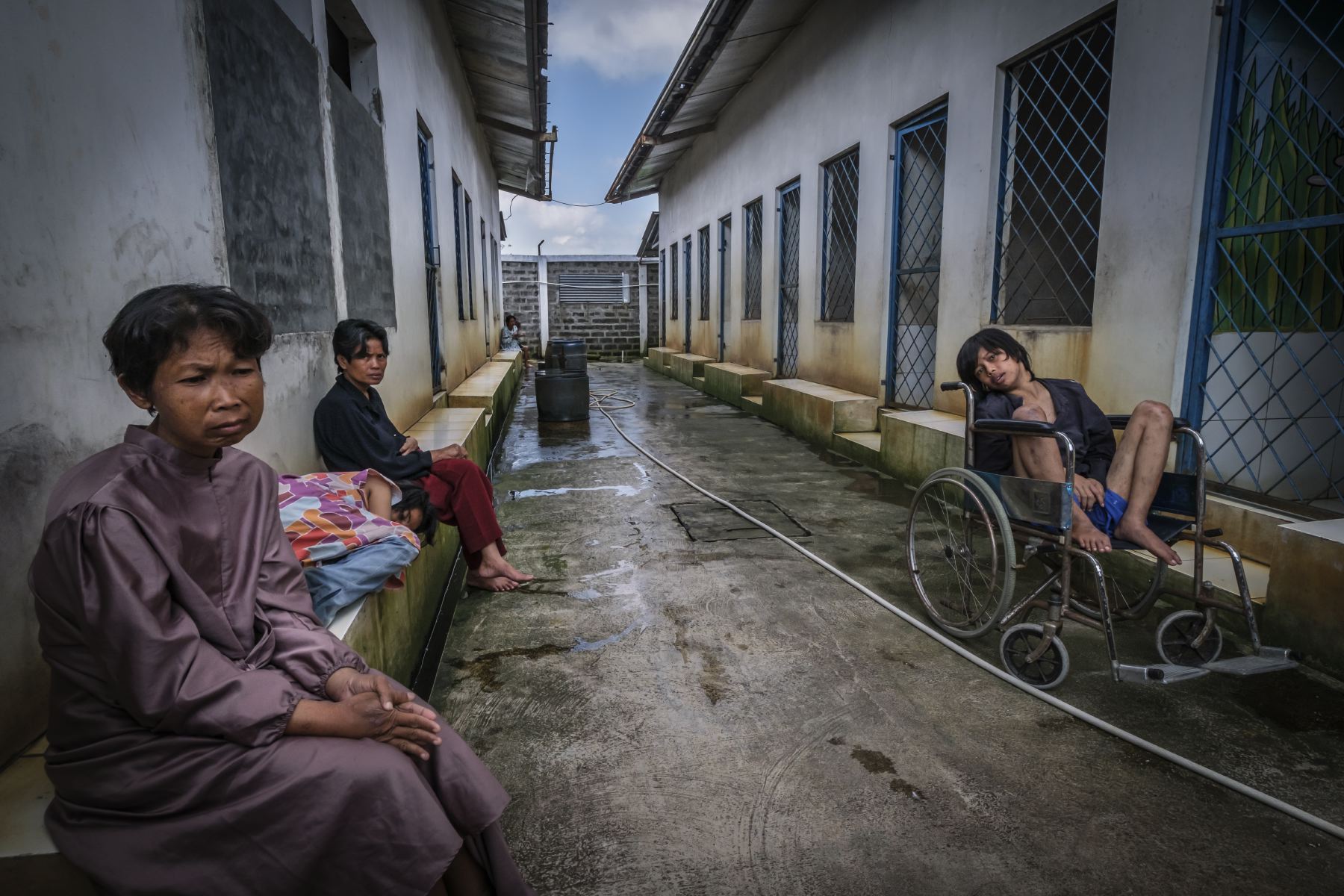
Several patients, including a girl in a wheelchair, sitting outside a row of cells. The cells have iron mesh doors, and the alley is enclosed by a steel fence (not seen in the picture) to ensure that no one can escape. It looks like a prison, but this is one of the few centers in Java where I did not see any patients shackled. On the contrary, it seemed like a very warm and welcoming environment as when I was there they had organized an event in a large courtyard to raise money for the center. Many of the residents were singing and performing in front of a camera that was streaming live on Instagram. The particularity of this facility is that they only take in people from the street. They do not accept individuals brought by families. The center is funded solely by private donors and does not receive any subsidies from the government.
Chains of Madness 12
Indonesia, Java Island,
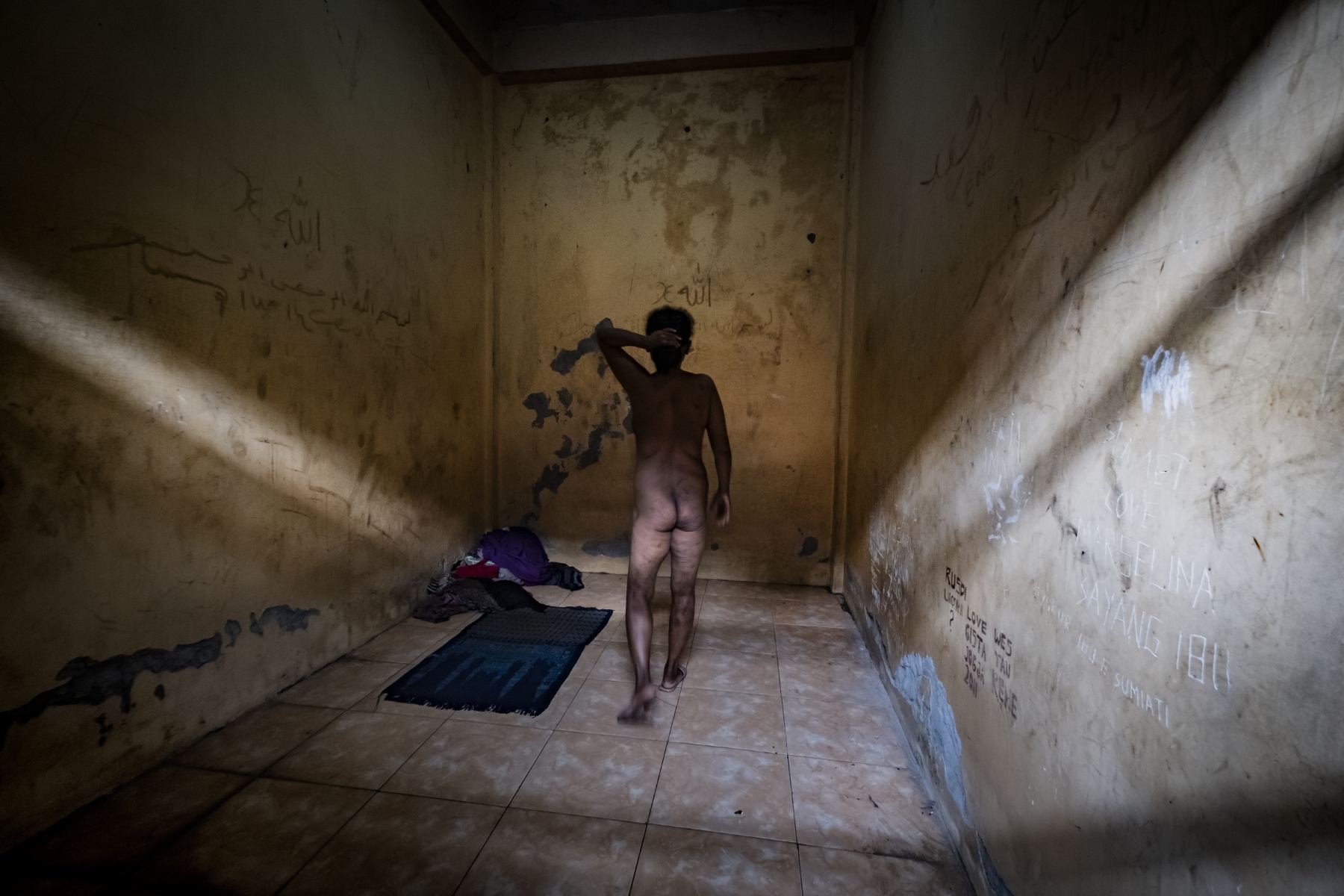
M. , around 35 years old, has been at the center for five years. Nothing has changed since my visit three months ago. She spins around in her cell, talking to herself incessantly. It is impossible to interview her. The caretakers tell me that she is now being given injections of antipsychotic drugs (11 so far) every two weeks, but there has been no improvement.