The war in Eastern Ukraine continues to escalate throughout the third year since Russia’s President Vladimir Putin ordered its full-scale invasion in February 2022 after years of diplomatic tensions. The hostilities in the eastern regions started in 2014, and many civilians have been forced to relocate to Western Ukraine or European countries.
In 2023 and 2024, Russian forces frequently targeted critical civilian infrastructures, leaving Ukrainian citizens without electricity, water and heating on the brink of collapse. Civilian gatherings have also been targeted by Russian forces, often employing ballistic missiles, such as the RIA restaurant in Kramatorsk in June, Druzhba Hotel in Pokrovsk in August, and a cafe in Hroza in the Kharkiv region, where 59 people were killed during a reburial vigil in October 2023.
The United Nations estimated that nearly four million people are internally displaced, and a further six and a half million have left the country; at least ten thousand civilians have been killed since February 2022; it is believed that civilian casualties are significantly higher since officials have been unable to visit areas where hostilities are still occurring.
In 2024, Russian forces made slow but steady advances through Ukraine’s Donetsk region, helped by the employment of new weapons systems such as gliding bombs and fibre optic drones. In the meantime, Ukrainian troops went on the offensive in Russia’s Kursk region, which represented the most significant breach of Russian borders since World War II. However, it was widely criticised by Ukrainian commanders defending Ukraine’s territories – its army has faced a shortage of human resources and deployed aggressive tactics through the military recruitment police, which resulted in many people hiding in their houses to avoid being drafted and sent to the infantry with only a few weeks of training.
The relentless bombardments continue to leave behind a trail of destruction, crippling Ukraine’s infrastructure, economy, and way of life, leaving every Ukrainian affected by the ongoing conflict.
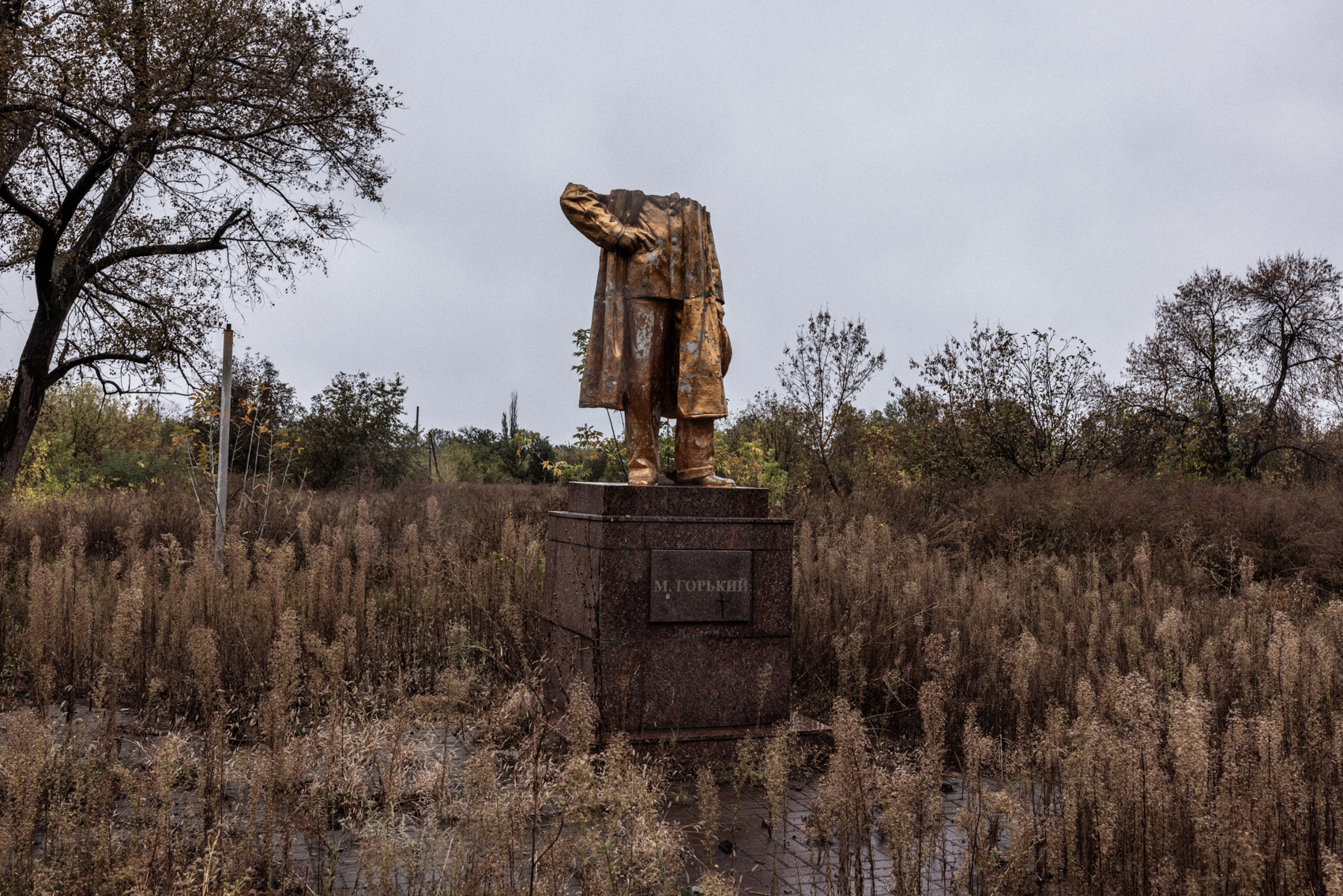
Decapitated culture
Chasiv Yar, Donetsk region, October 8, 2023.
A decapitated statue of Russian writer Maxim Gorky stands in Chasiv Yar. Overlooking Bakhmut, the town is a key Ukrainian logistics hub and the last elevated position before major cities like Kramatorsk and Sloviansk. Street battles are currently taking place in the town.
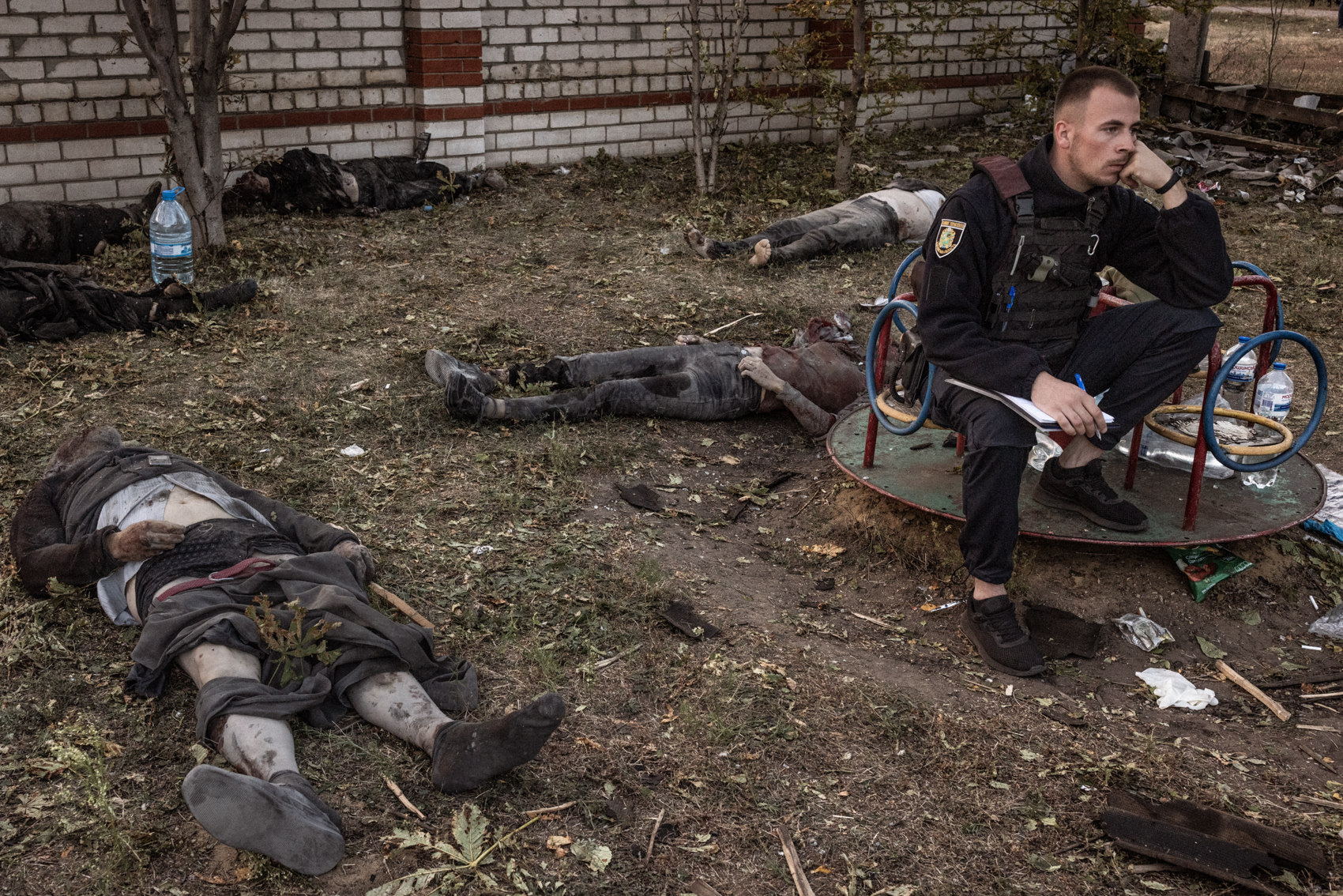
Hroza massacre
Hroza, Kharkiv region, October 5, 2023.
A Ukrainian police officer sits beside civilian bodies outside a café in Hroza, Kharkiv, after a Russian ballistic missile striked the gathering. The Iskander missile attack killed 59 civilians gathered for soldier Andriy Kozyr’s reburial, killing his entire family in one of the war’s deadliest strikes. A fifth of the town was killed in the strike.
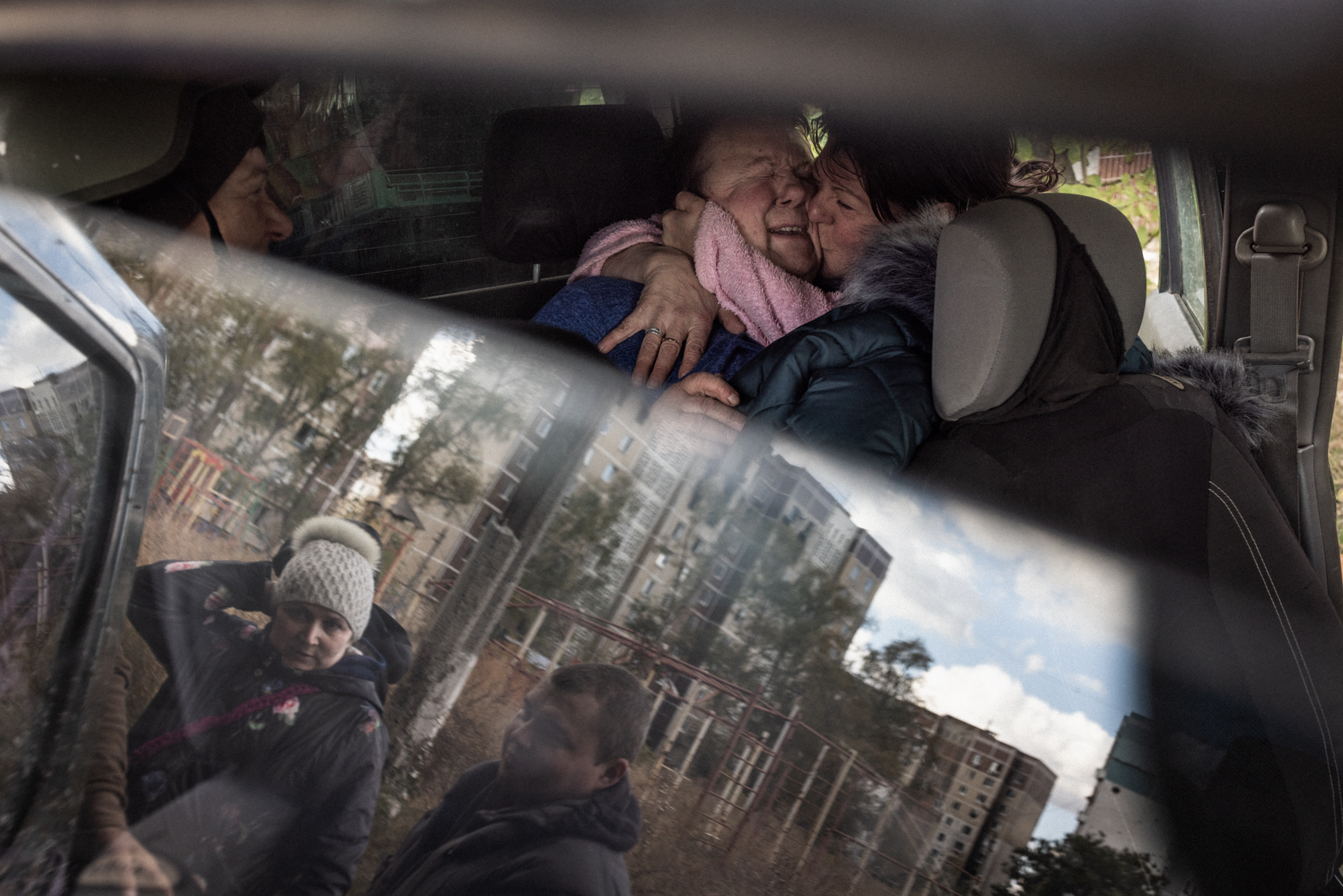
Farewell Vulhedar
Vulhedar, Donestk region, October 19, 2023.
Tetiana Shvets, 62, hugs her friend Svitlana as she’s evacuated from Vuhledar by Chaplain Oleg Tkachenko. After 20 months in a basement, Tetiana chose to leave upon seeing her ruined hometown. Tetiana and Svitlana became close friends as they shared the difficulties of living in their apartment building’s basement as artillery strikes were pummeling their city. Vuhledar was built for the nearby coal mine and had many high-rise buildings, now reduced to blackened skeletons. Russian forces tried an unsuccessful frontal assault on the city in the first months of 2023, and they were positioned a kilometre away from the town for over a year. After almost three years of fighting, Vuhledar was captured by Russian forces in September 2024.
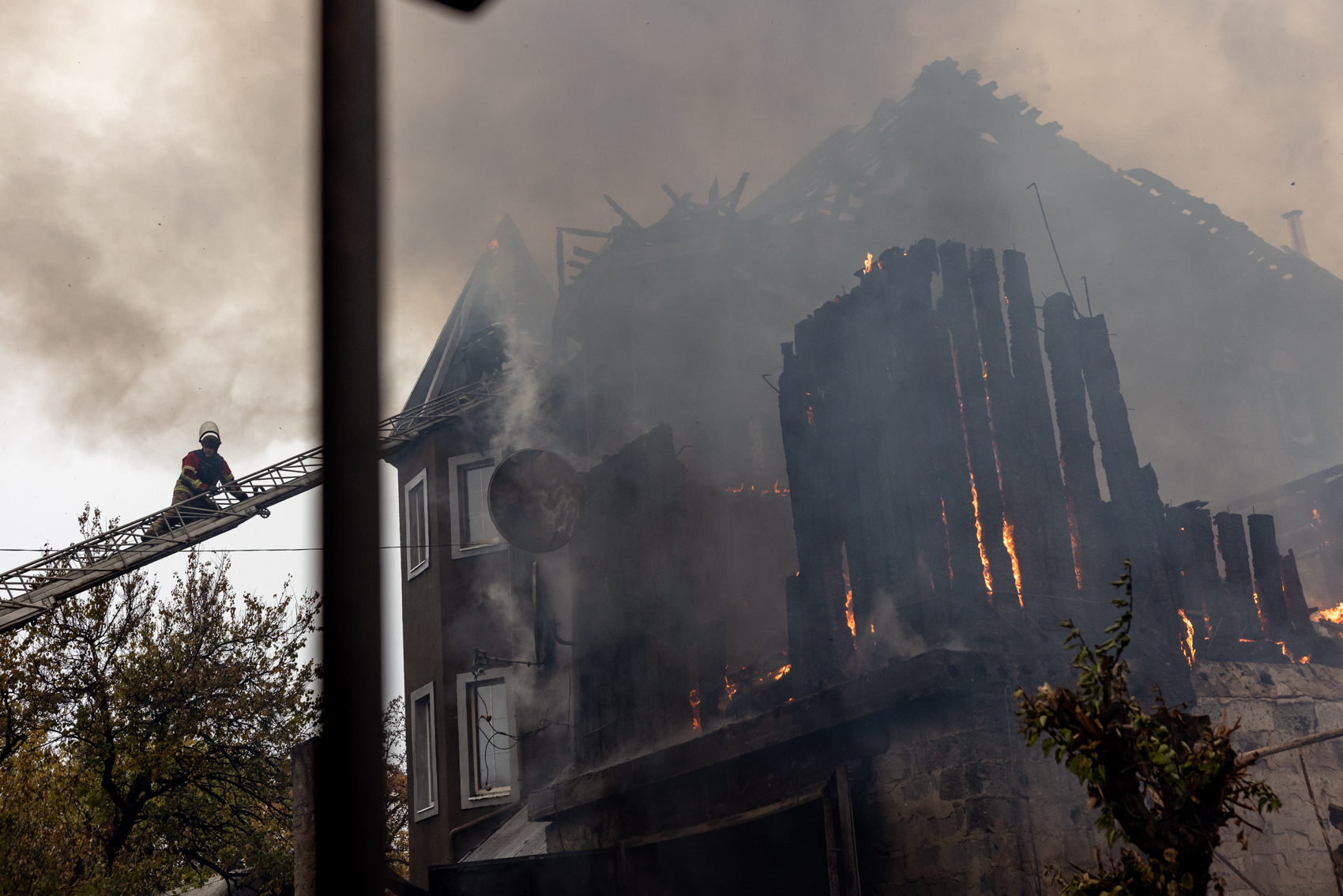
Serving until the last moment
Pokrovsk, Donetsk region, November 10, 2024.
Ukrainian firefighters respond to a strike on a residential building in Pokrovsk. About 2,000 civilians remain under constant threat as NGOs deliver aid. If captured, the city could split the Donetsk region and threaten Ukraine’s southern Donbas region defences. The battle of the town is about to begin with russian forces on the outskirts of the town.
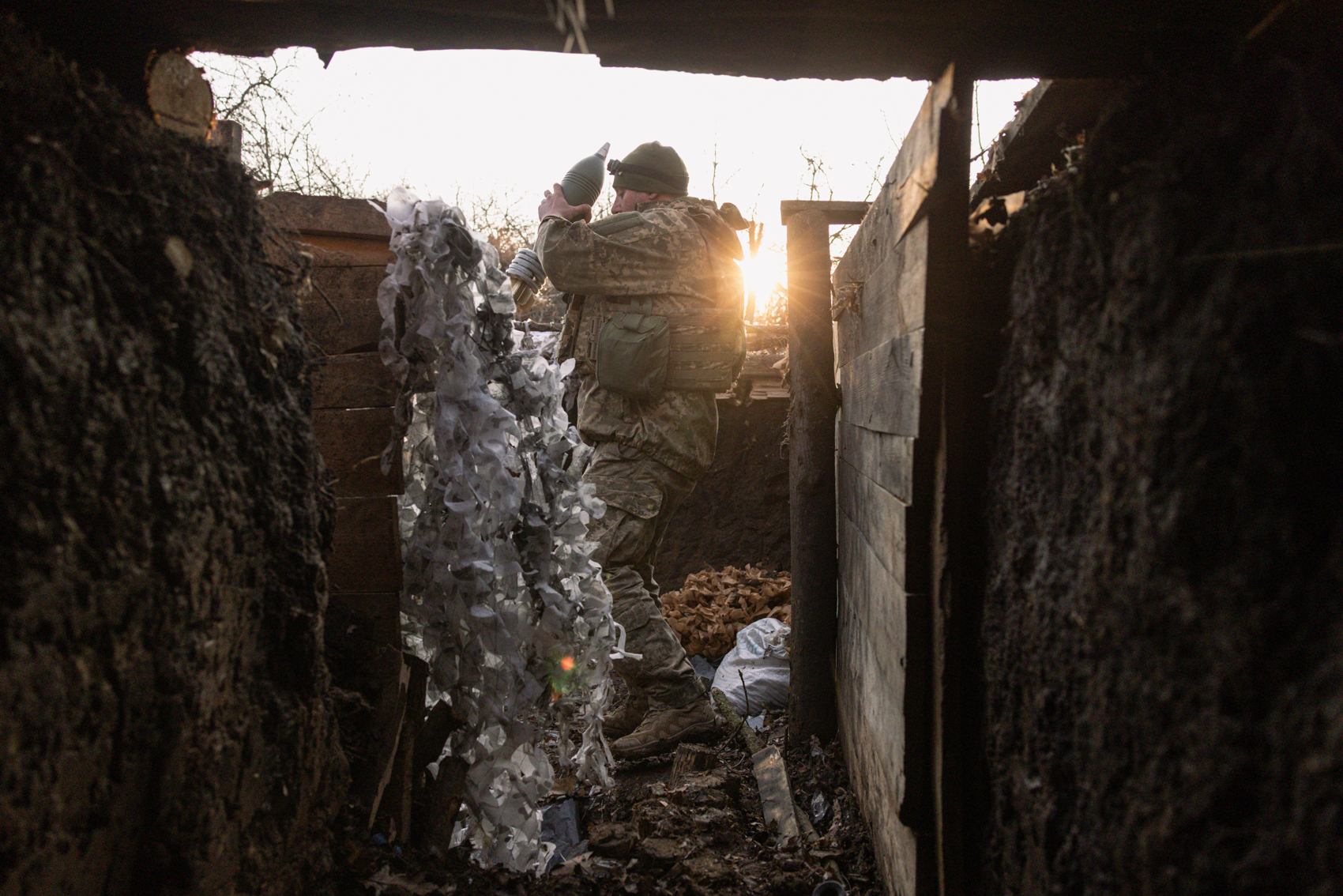
On the Russian border
Sumy region, March 9, 2025.
A service member of the 117th Brigade of the Territorial Defence Forces operate a Ukrainian-made 120mm mortar towards Russian positions. Ukrainian troops went on the offensive in Russia’s Kursk region, which represented the most significant breach of Russian borders since World War II. However, it was widely criticised by Ukrainian commanders defending Ukraine’s territories – its army has faced a shortage of human resources and deployed aggressive tactics through the military recruitment police, which resulted in many people hiding in their houses to avoid being drafted and sent to the infantry with only a few weeks of training.
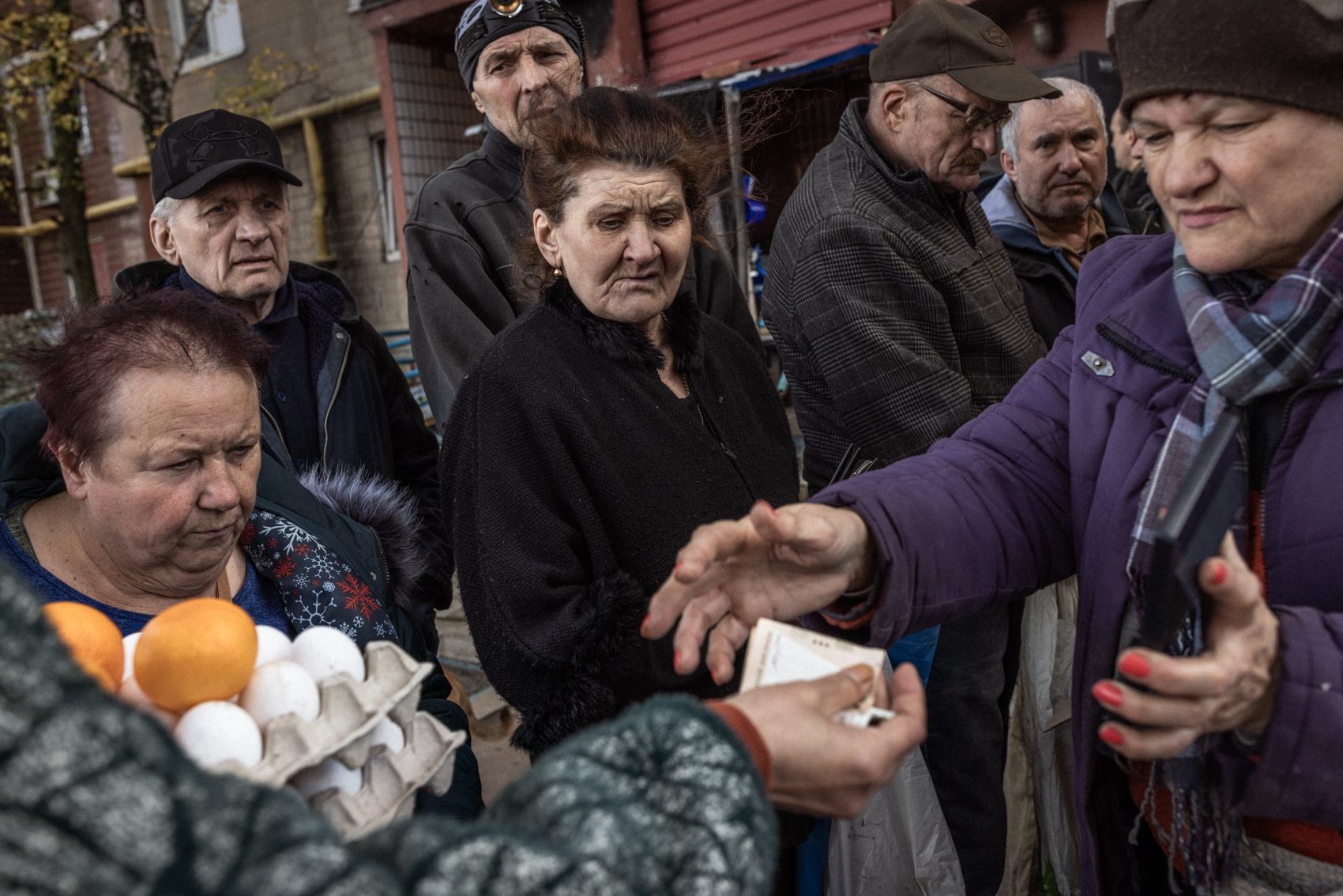
Tense moments
Vuhledar, Donetsk region, October 19, 2023.
Nadiia (right) sells food to locals staying in Vuhledar amid intense hostilities. Alongside military Chaplain Oleg Tkachenko, she delivers supplies and assists in evacuating residents, despite harsh conditions and constant dangers coming from the sky. Russian forces were only a kilometre away when this photograph was taken, the town was occupied in September 2024.
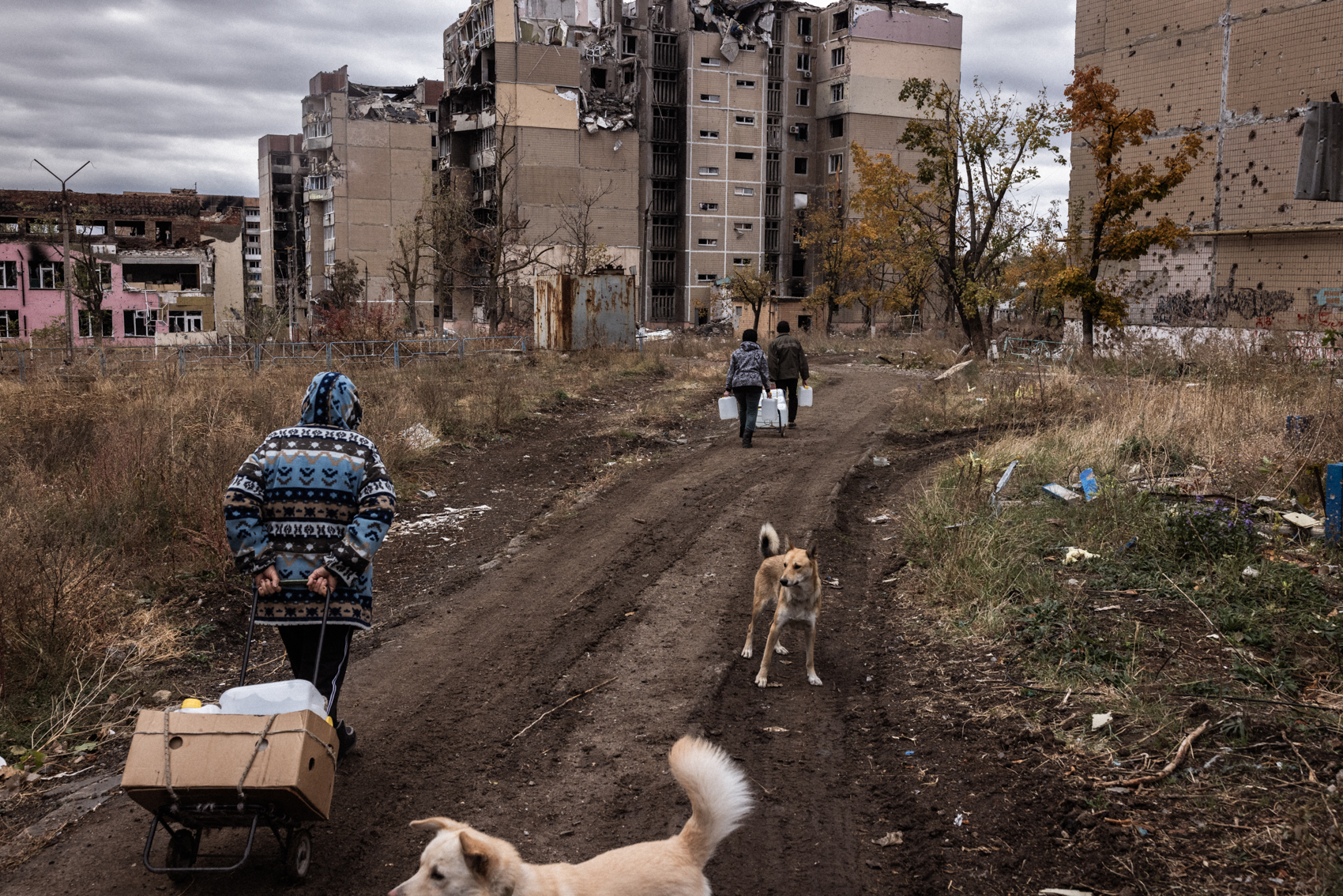
Vulhedar
Vulhedar, Donetsk region, October 19, 2023.
Vuhledar residents carry supplies after a food distribution during a lull in the shelling. With no basic services, 200 civilians lived in basement shelters, relying on the kindness of volunteers. Russian forces occupied the town in September 2024.
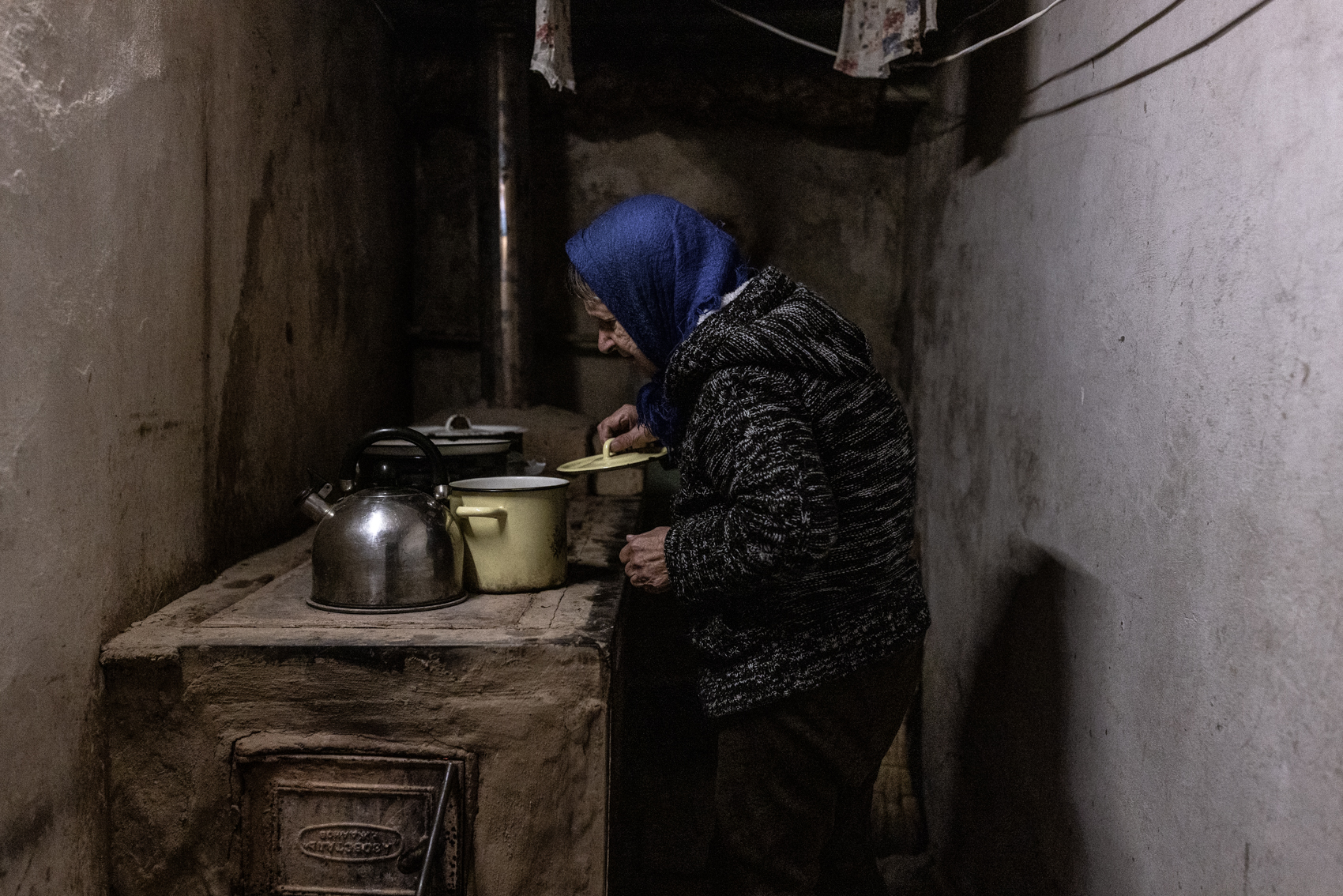
Surviving in a hospital
Siversk, Donetsk region, October 13, 2023.
Nadiia Mefodivna, 70, cooks in the hospital’s basement, where she has been living since her home was destroyed by shelling, as explosions rattle Siversk. Mefodivna shelters with thirteen other residents who didn’t want to evacuate. The hospital has been shelled many times and has been severely damaged. However, people feel safe in the basement.
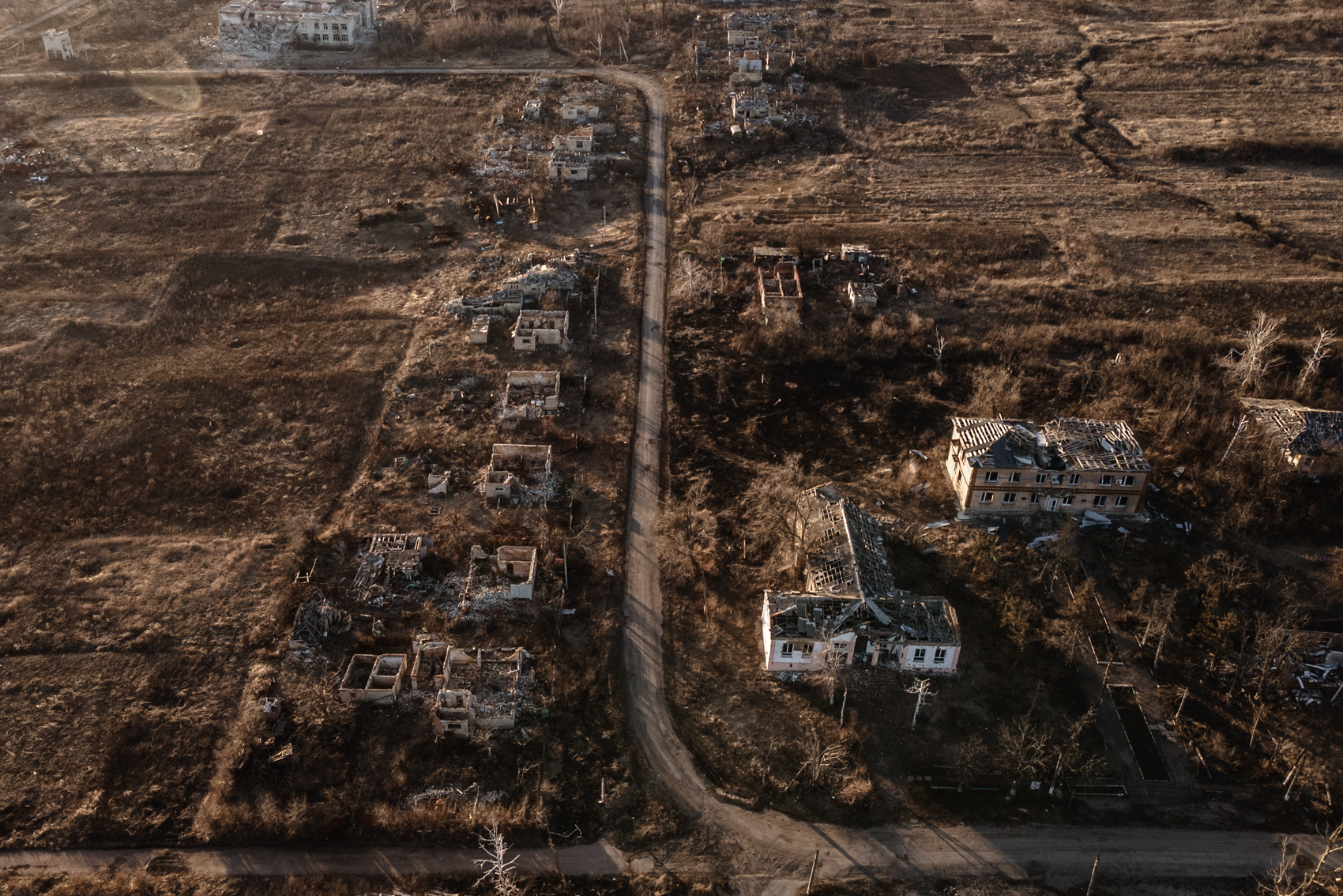
Scars of war
Kamianka, Donetsk region, February 27, 2024.
A drone image shows the scars of war on the Ukrainian territory in the village of Kamianka. In the photo, trenches, craters, and destroyed houses are visible. Russian forces occupied the area at the beginning of the war, and it was liberated during the Ukrainian counter-offensive in September 2022.
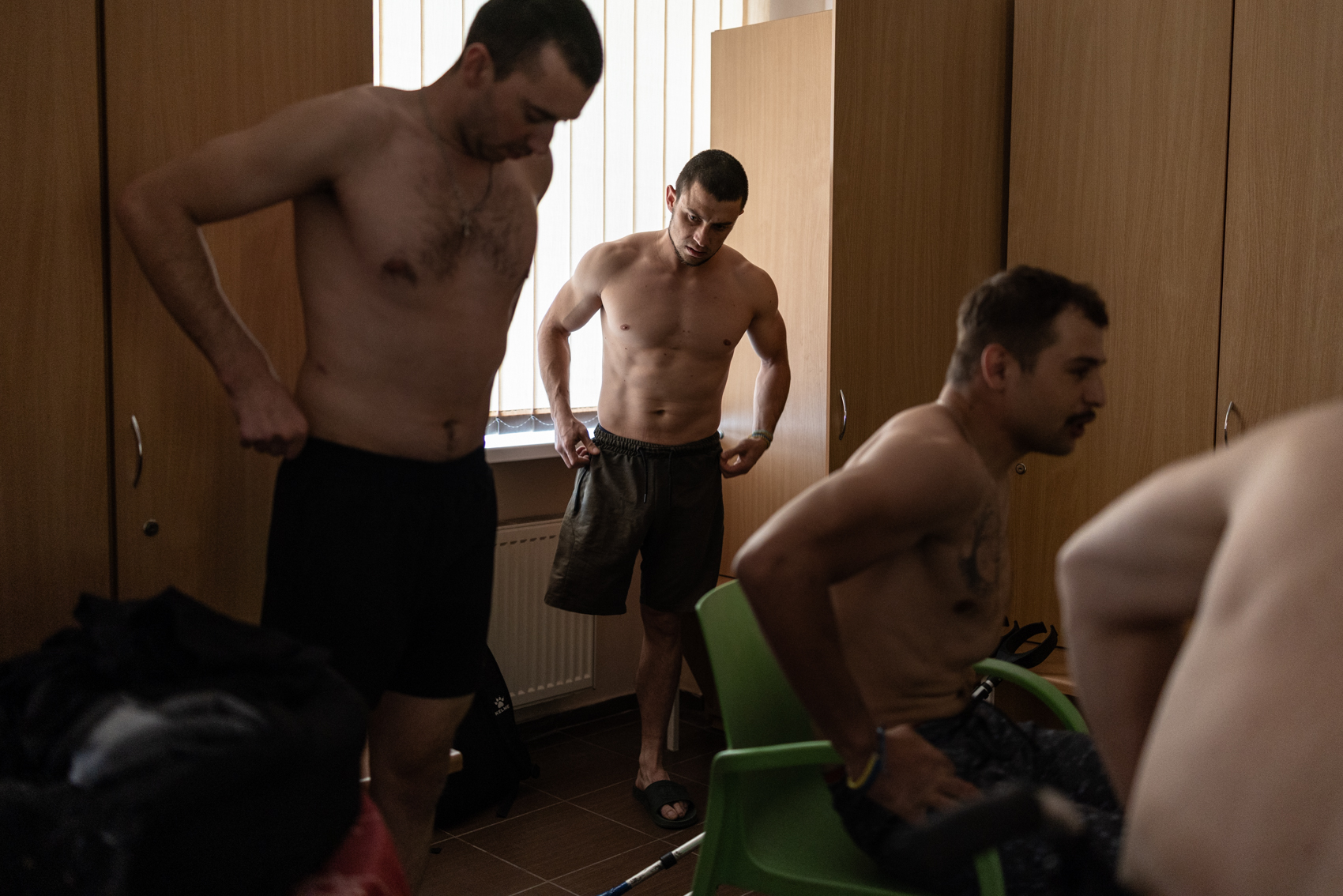
The road of return to the fight
Kyiv, Kyiv region, November 19, 2024.
Kuts Dmytro Anatoliyovych, 30, prepares for swim therapy at Tytanovi rehab centre in Kyiv. Anatoliyovych was wounded in the Donetsk region, Klishchiyivka, by an anti-personnel mine that caused the amputation of his left leg. He undergoes a rehabilitation program at Tytanovi Centre, which offers a second opportunity to the most challenging cases of young Ukrainian men and women injured on the battlefield. Anatoliyovych plans to return to the Armed Forces of Ukraine and continue serving his country once he receives the osteointegration surgery and can walk again.
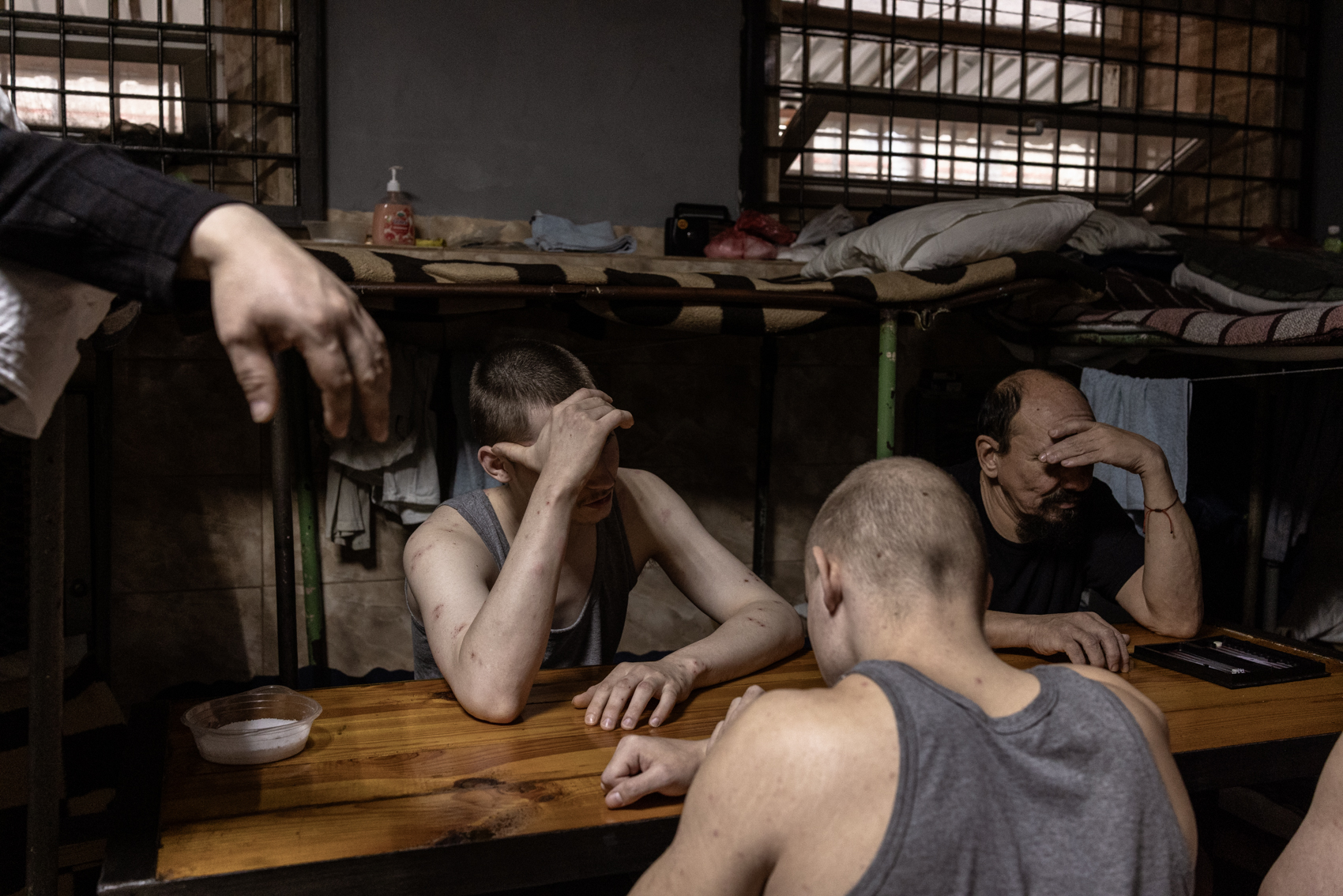
Russian POWs
Sumy region, November 20, 2024.
Russian prisoners of war cover their faces to conceal their identity during a visit to one of the prisons in the region, where the captured soldiers are held. In the aftermath of Ukraine’s recent offensive in Russia’s Kursk region, over 300 Russian soldiers were taken captive by Ukrainian soldiers and processed at the prison. By November 20, only 25 remained, confined to two cramped, sweltering underground cells in a Ukrainian detention facility. The men passed the time—sitting on wooden benches and playing a game reminiscent of “shut the box,” while others sat on old bunk beds. While most of the prisoners had been held for two months, a few were recent arrivals, including a Chechen fighter. For many of these soldiers, it was likely to be their first battle, their capture came after the most significant breach of Russian borders since World War II.
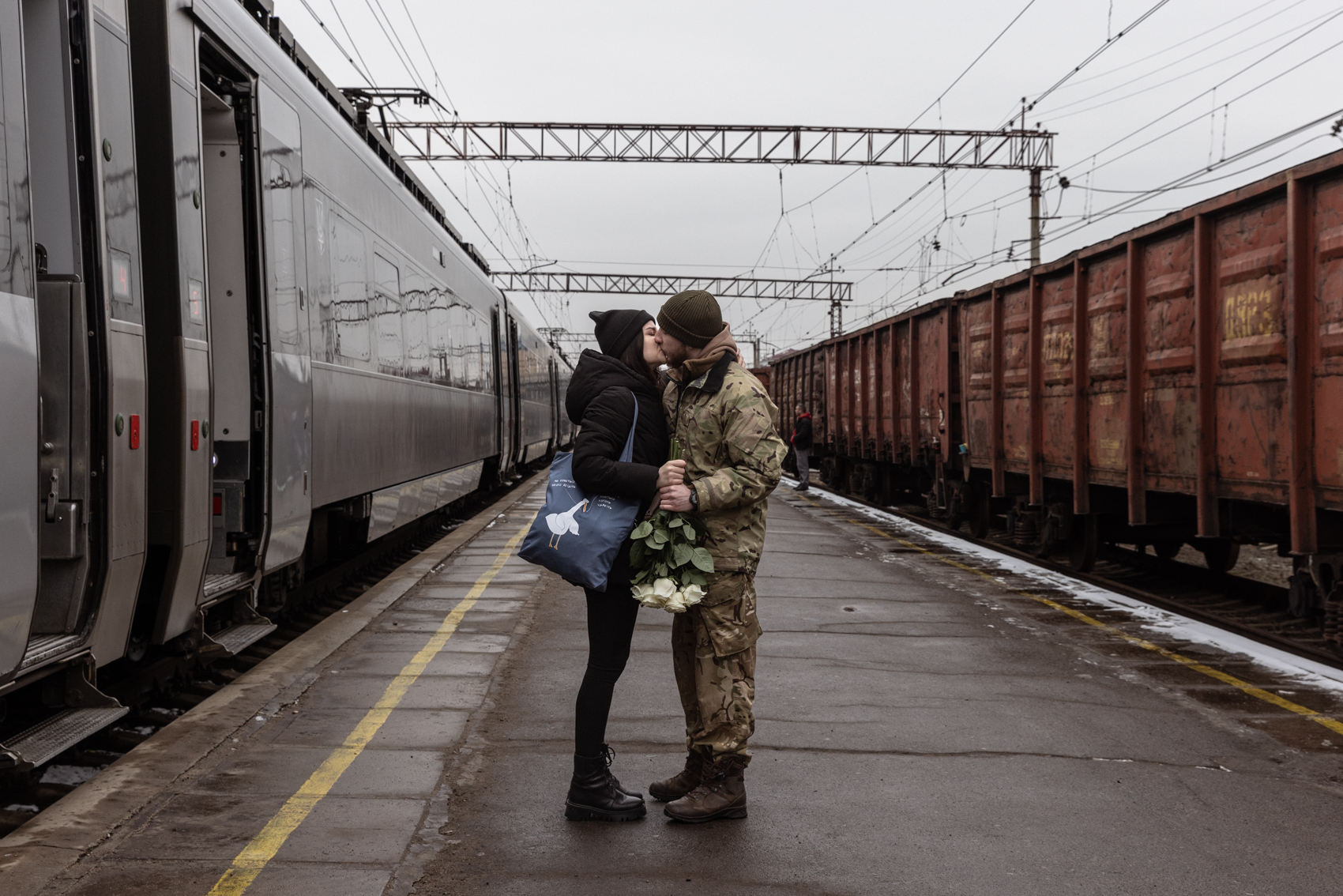
I hope we will see each other again.
Kramatorsk, Donetsk region, February 22, 2024.
Ukrainian infantryman “Oregon” of the 3rd Assault Brigade says goodbye to his girlfriend Anna at Kramatorsk Train Station on February 22, 2024, in Kramatorsk, Donetsk region, Ukraine. The train station has become a place of reunion and separation, as Kramatorsk is one of the main cities where soldiers live during a few-day rotation from the Eastern frontline. The intercity train that runs from Kramatorsk to Kyiv in five hours plays a vital role in connecting families and young couples.