In July–August 2024, Bangladesh witnessed the Monsoon Revolution, ignited by the Anti-Discrimination Student Movement over quota reform protests. What began as a student-led effort quickly became a nationwide uprising, forcing Hasina’s autocratic government to flee. Unarmed citizens made history during nearly three weeks of relentless protests despite indiscriminate gunfire. The UN Fact-Finding Committee estimated 1,400 deaths, while the Interim Government, led by Nobel Laureate Muhammad Yunus, reported over 1,000 deaths and around 20,000 injuries. Many view the movement as a mass uprising, a second independence, and liberation from Hasina’s perceived subservience to India. The human cost was staggering: hundreds lost hands, legs, or sight, many endured multiple amputations or blindness, and countless revolutionaries, martyrs, and their families lost livelihoods, loved ones, and entire families, leaving a generation scarred.
16-years of dictatorship—marked by disappearances, political murders, suppression of dissent, corruption, unemployment, inflation, religious division, vote rigging, quota abuses, and anti-national deals—sparked massive outrage. Police, backed by Awami League officials, activists, Chhatra League, Border Guard, and parts of the army, brutally suppressed the protests, fueling nationwide resistance and unrest. On July 16, unarmed Abu Sayed, standing with hands raised, was martyred by police fire, transforming the protest into a nationwide uprising. The country shut down, including the internet. Protesters were shot indiscriminately, even from helicopters & tankers, & martyrs’ bodies were desecrated. Leaked call records revealed that Dictator Hasina personally authorized lethal weapons & instructed hospitals to deny treatment to the injured.
This year-long project chronicles the stories of those martyred & wounded for freedom, along with their families. It spans all walks of life—students, workers, rickshaw pullers, drivers, corporate officials, men, women, & children—from diverse religions, including Hindus, Muslims, Buddhists, & Christians. It includes leftists, right-wingers, political supporters, & students from schools, madrasas, & universities—everyone who sacrificed against discrimination. Visiting victims’ homes & hospitals, I explored their struggles, resilience, & courage. This isn’t mere history but a living document of a nation reborn. As the son of a 1971 freedom fighter, my father’s sacrifice remains my deepest inspiration.
Too often, the sacrifices of those who fought for democracy, humanity, & a safer world are forgotten. Over the past year, I have worked to document these stories, which reveal the enduring human cost of revolution long after headlines fade. They highlight the lasting impact of the 2024 revolution in Bangladesh & inspire positive social & political change. This struggle resonates beyond Bangladesh, serving as a powerful example of resistance against discrimination & dictatorship across Asia & the world, including Indonesia & Nepal. This project seeks to honor the sacrifices of the oppressed, amplify voices against injustice, & help prevent future atrocities. My aim is not only to preserve memory but to transform it into awareness, compassion, & action—honoring the fallen, supporting the living, & inspiring a more just society both in Bangladesh & globally.
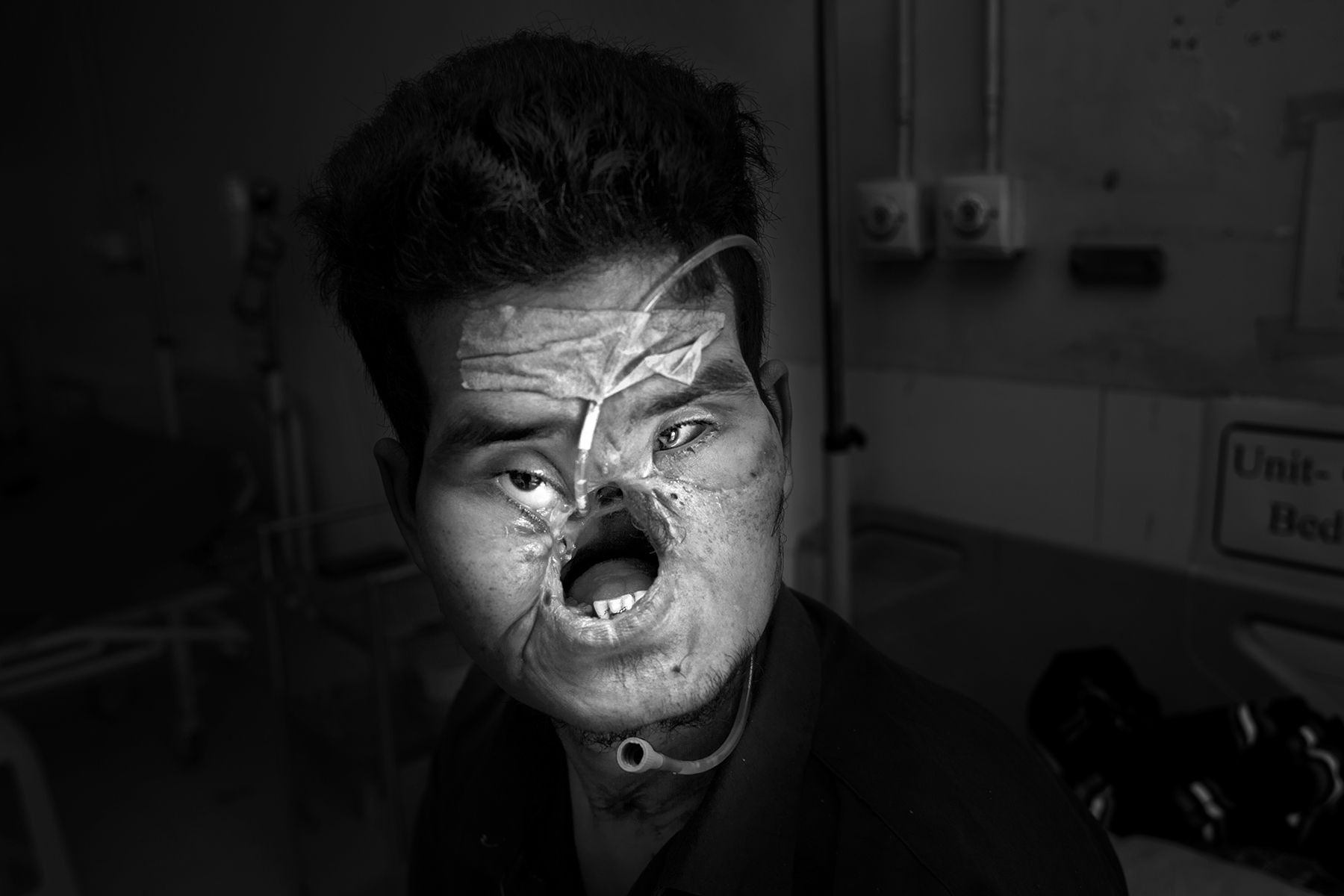
01 The New freedom fighters of Bangladesh 2024
Khokon Chandra Barman (27), one of the most brutally wounded in the July 2024 uprising, embodies the violence of Hasina’s authoritarian regime and repressive police. Shot at point-blank range during the Jatrabari Massacre on 05 August 2024, in front of the Jatrabari Police Station. He was hit in the leg, arm, and face, his nose was completely blown off and leaving a huge hole in his mouth. A Hindu from Bangladesh’s minority community, Khokon Chandra Barman defies Hasina regime’s long-held political narrative that Hindus are only their supporters, his sacrifice proving Hindus are only Bangladeshis. He stands as a symbol of hope for a non-communal Bangladesh. This image serves as a powerful testament to the brutality and acts of violence carried out by the authoritarian regime of Hasina and her repressive police force. I wanted it to be seen this way so that people would understand what happened—and remember the naked brutality of Hasina.
In his words:
“Seeing my brothers die one after another, I burned with rage against Hasina and her regime. I promised myself: If we live, we live together; if we die, we die together. In this country, we either live free or we die fighting. That was my vow in this war.”
“I can’t eat solid food—only liquid, and even that is painful. My mouth aches. I’ve lost sight in my left eye and see blurry with the right. I breathe through a tube. My face is disfigured. I have no nose. People fear me when they see me.”
This photo was taken on 26 December 2024, at the National Institute of Burn & Plastic Surgery hospital in Dhaka, Bangladesh
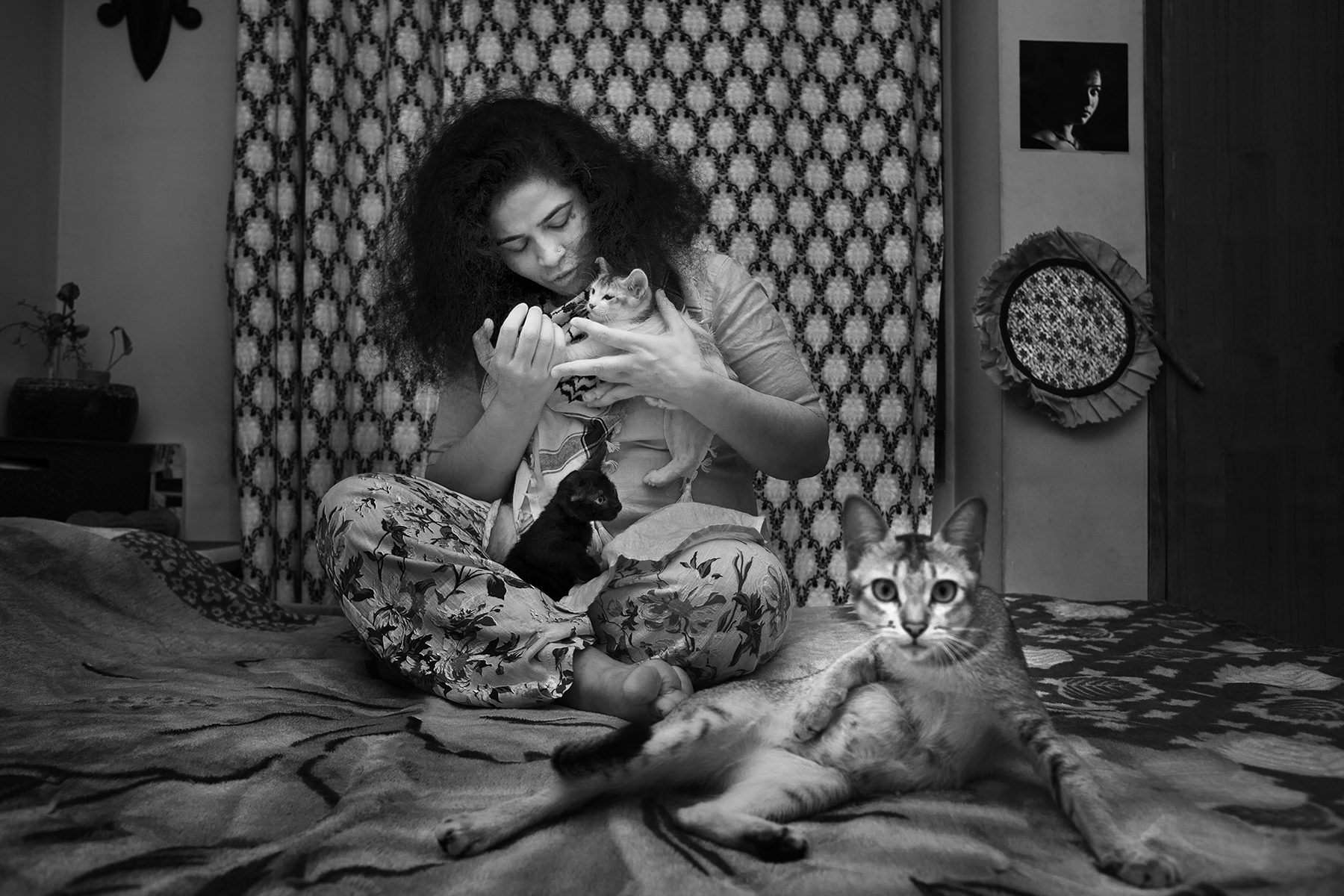
02 The New freedom fighters of Bangladesh 2024
Dil Afroz (40) is an activist and wounded fighter of the July 2024 Revolution against Hasina’s 16-year authoritarian rule. On 17-July-2024, during protests at Dhaka University’s TSC, she was the first to cry out, “We will not move!” under police fire. Targeted by a grenade, her defiance went viral, inspiring thousands. With no family except her beloved cats, she bade them farewell before joining the struggle. Severely burned and denied medical care, she endured immense pain. A year later, still scarred and traumatized, she finds solace in her cats. Her sacrifice showed the revolution was for everyone, not just students. This photograph was taken on 25 December 2024 at her rented house in Pallabi, Dhaka, Bangladesh, where she lives alone.
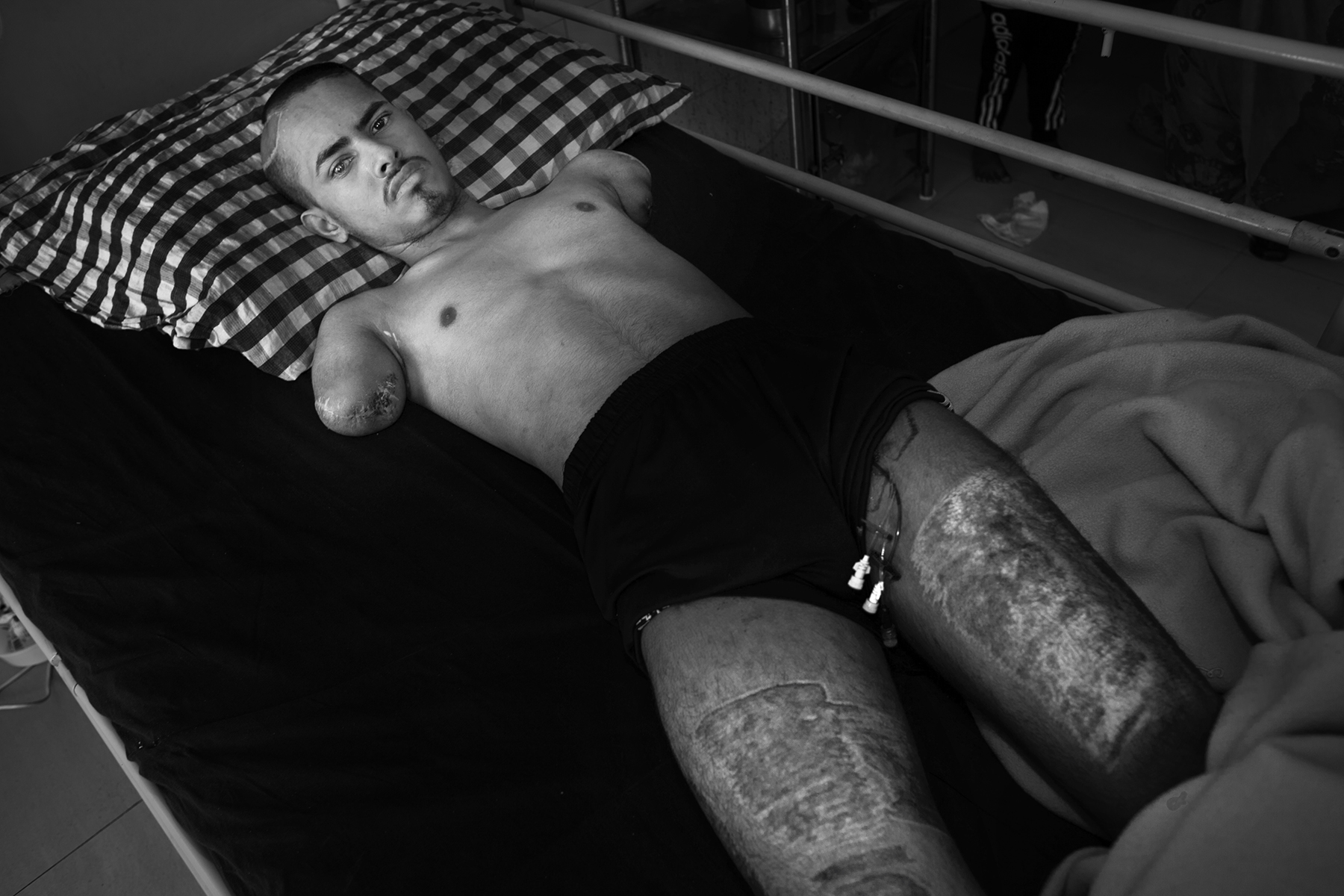
03 The New freedom fighters of Bangladesh 2024
In July 2024, 20-year-old Israfil became a brutal victim of Hasina’s authoritarian regime during the anti-discrimination student uprising. On 4 August, at Mahipal, Feni, he climbed a roof to escape police firing but was electrocuted and fell, losing his right eye, both hands, and suffering severe head and body injuries. Over five months, he endured four operations and cruel suffering. Alive but lifeless, silent and indifferent, all his dreams seemed dead. His mother and brother stay by his side, with the hospital becoming their home, witnessing a young life shattered yet surviving. This photo was taken on 26 December 2024, “National Institute of Burn and Plastic Surgery” hospital in Dhaka, Bangladesh.
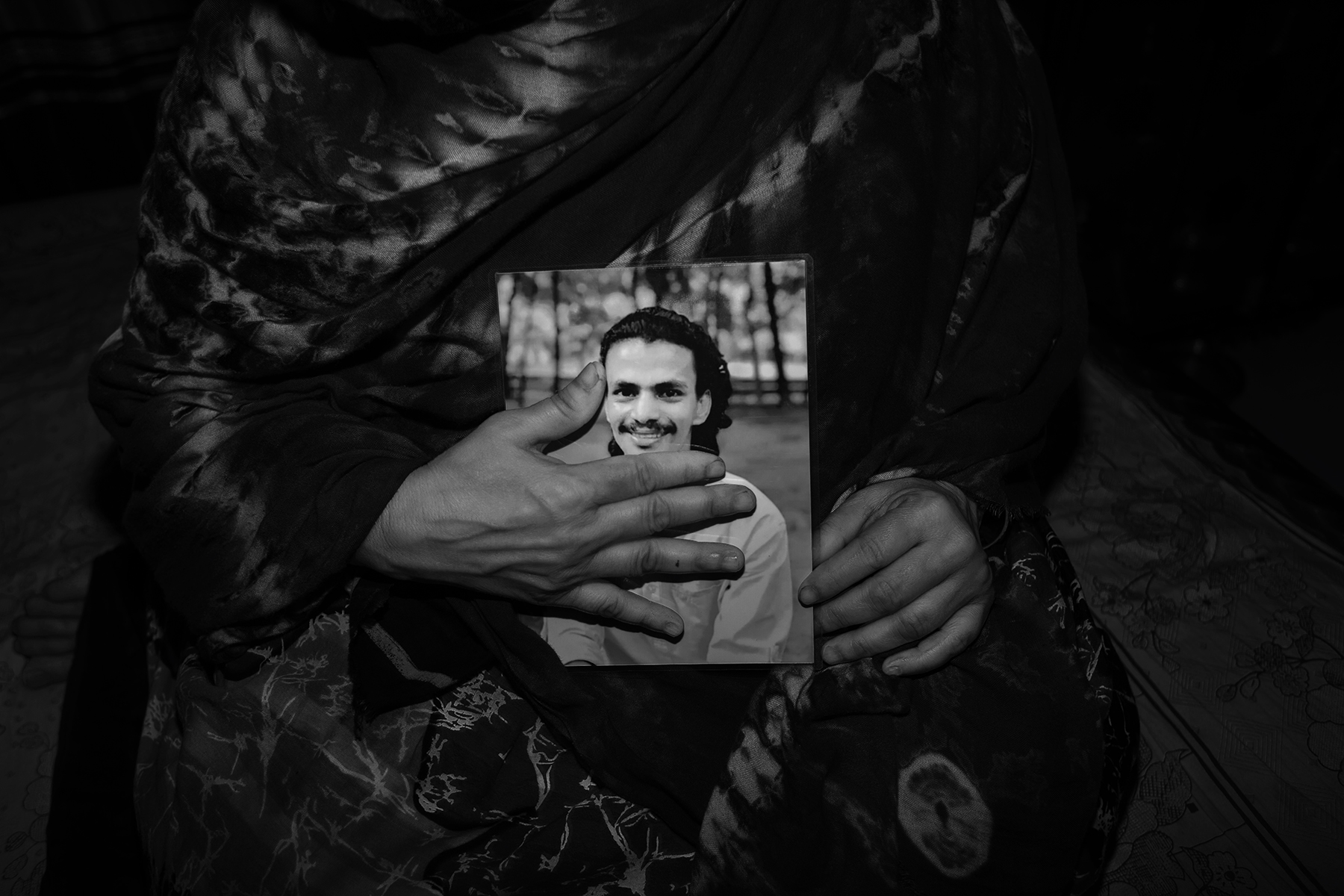
04 The New freedom fighters of Bangladesh 2024
Zulfiqar Ahmed Shakil (23), a second-year honors student and activist of the Bangladesh Students Federation, was deeply involved in leftist politics. On August 4, 2024, while protesting against the autocratic Awami League government in Mirpur 10, Dhaka, he was shot twice in the head. One bullet exited, but the other remained lodged in his skull. After days of battling for his life, Shakil was martyred. His family, displaced by river erosion, lived in a sublet (a small room) in Mirpur 12, Dhaka. Despite poverty, Shakil bore the weight of his family’s livelihood and his own education by tutoring and teaching.
Shakil’s mother, Ayesha (52), often cleans her son’s portrait in the photo frame, a cherished gift from the Bangladesh Students Federation honoring Shakil’s memory. In this ritual, her heart longs to feel her child’s presence once more. Her hands move tenderly, as if cradling him again. Although her pain remains hidden, it resonates profoundly within her. In the quiet act of remembering, she discovers a fleeting moment of solace—a silent tribute to a son lost, yet never forgotten. Ayesha has two married daughters who live far away, and another son, Suman (18), who struggles as a factory worker, enduring a life of poverty.
In the picture, Ayesha holds a photo of her martyred son Shakil close to her chest. The photo was taken on 20 March 2025 in Mirpur 12, Dhaka, Bangladesh.
05 The New freedom fighters of Bangladesh 2024
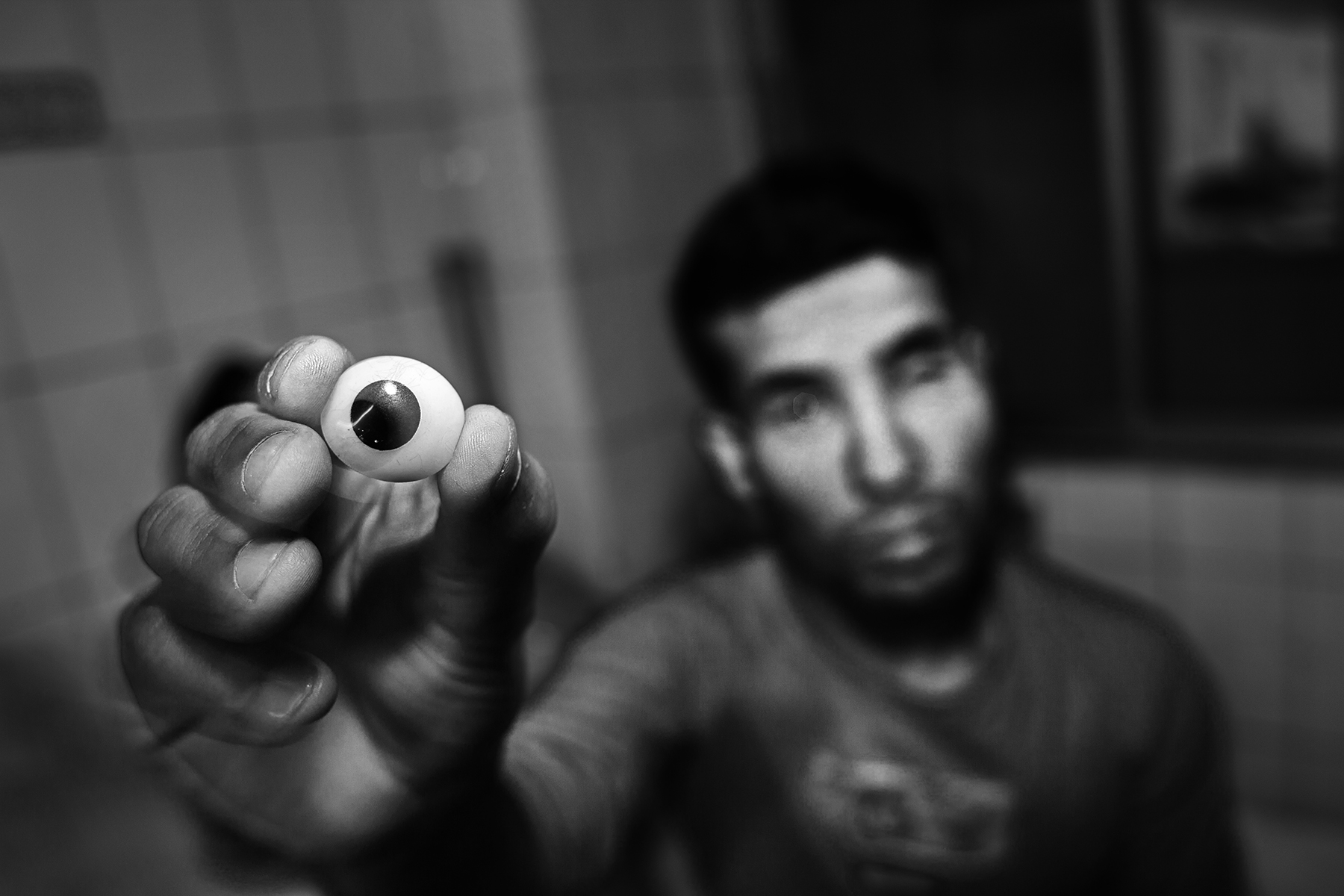
Khairul Islam, a 24-year-old mason, was shot in the eye while protesting on July 18 in front of the Madhupur Police Station in Tangail city. He collapsed on the road, suffering fractures to his facial bones and teeth, along with multiple other injuries. Due to the severity of the damage and unbearable pain, his left eye had to be surgically removed and replaced with an artificial one. He now experiences blurred vision in his right eye as well. Originally from Madhupur in Tangail, Khairul has been undergoing treatment at the National Institute of Opthalmology & Hospital (NIOH) in Dhaka for a year.
In the picture, Khairul is seen removing and holding his artificial left eye, made of stone, as he displays it proudly. His blurry, poignant gaze reflects the struggle he faces in his current life. This photo was taken on 21 March 2025, National Institute of Opthalmology & Hospital (NIOH) in Dhaka, Bangladesh.
06 The New freedom fighters of Bangladesh 2024
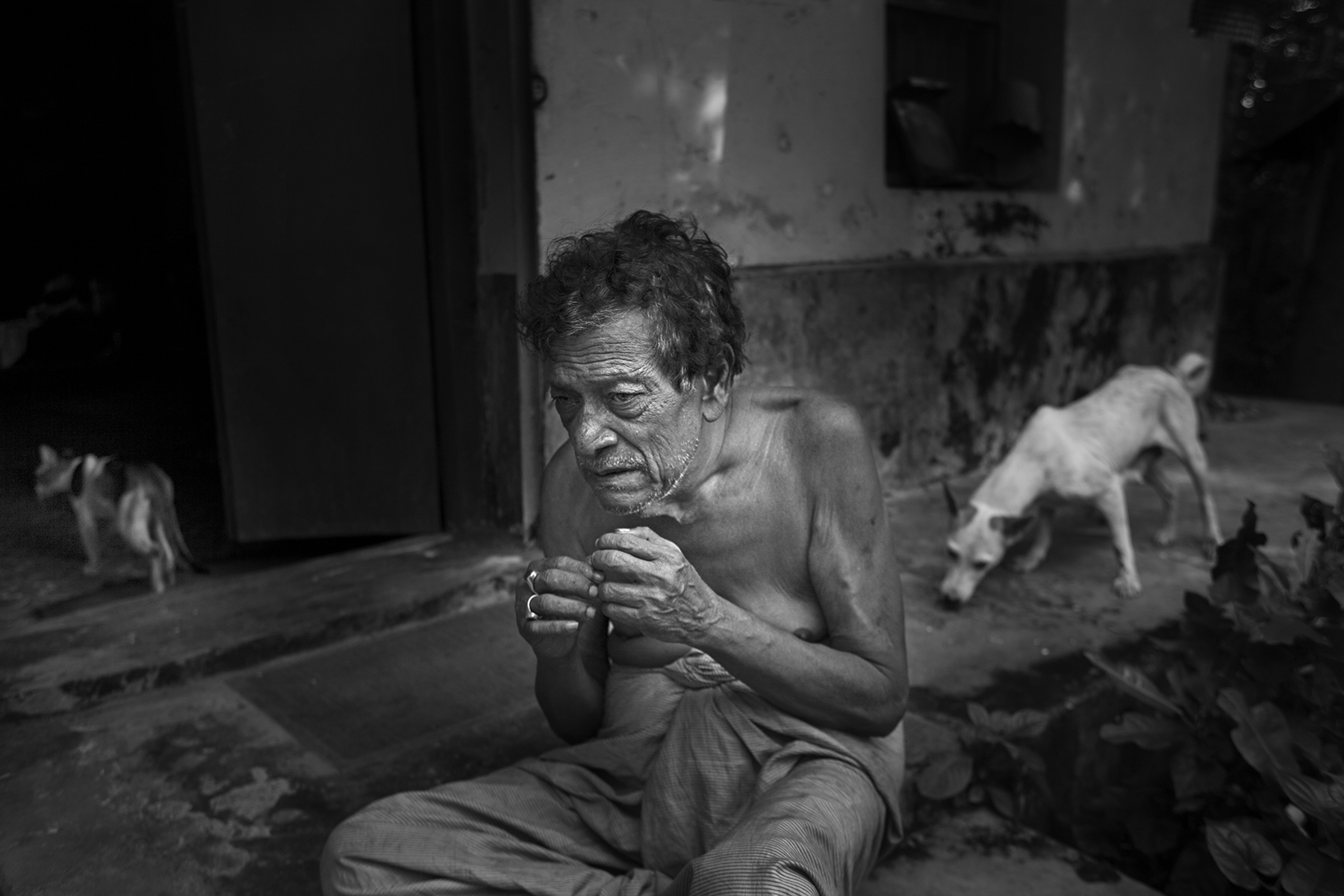
Seventy-five-year-old Santosh Kumar Barua, a former schoolteacher who taught for 44 years, was seriously injured during the movement while buying a table at Sabur Road in Patiya. Beaten with sticks on his head, shoulders, and back, he fainted from the assault and later suffered major head and shoulder injuries. Unmarried and with only a foster son, he was taken to Chittagong Medical College Hospital but received no proper treatment and faced neglect. Forced to seek care at a private hospital, he incurred heavy debts. His foster son, 25-year-old Biplob Barua, remains away from the village, unable to return home due to the unpaid loans for Santosh’s treatment.
“My treatment has stopped, I have no money for medicine. Someone get only 6,000 BDT (around $50) and am asked every day for debt repayment,” says Santosh in a tearful voice. He now suffers from severe headaches, dizziness, shoulder and back pain, memory loss, abnormal behavior, and sleepless nights. He cannot walk or eat properly and lives in loneliness and pain. “My whole body hurts, my head doesn’t work, I forget what I have to do. When I try to sit, lie down, or get up, I feel dizzy and fall,” he cries. Once a teacher, he now feels ashamed to seek help: “Should I pay my debts or seek treatment? I can’t even afford food—I am destitute.”
In the picture, Santosh is seen coming out of the house and sitting on the stairs, moaning in pain. “How much longer can I sit alone inside? No one comes to see me, I can’t even talk to anyone. Is it possible to survive like this? Please come to see me sometimes,” he told me. He forgets moments later what he was doing or trying to do. This photo was taken on 06 November 2024, Karal, Patiya, Chittagong, Bangladesh.
07 The New freedom fighters of Bangladesh 2024
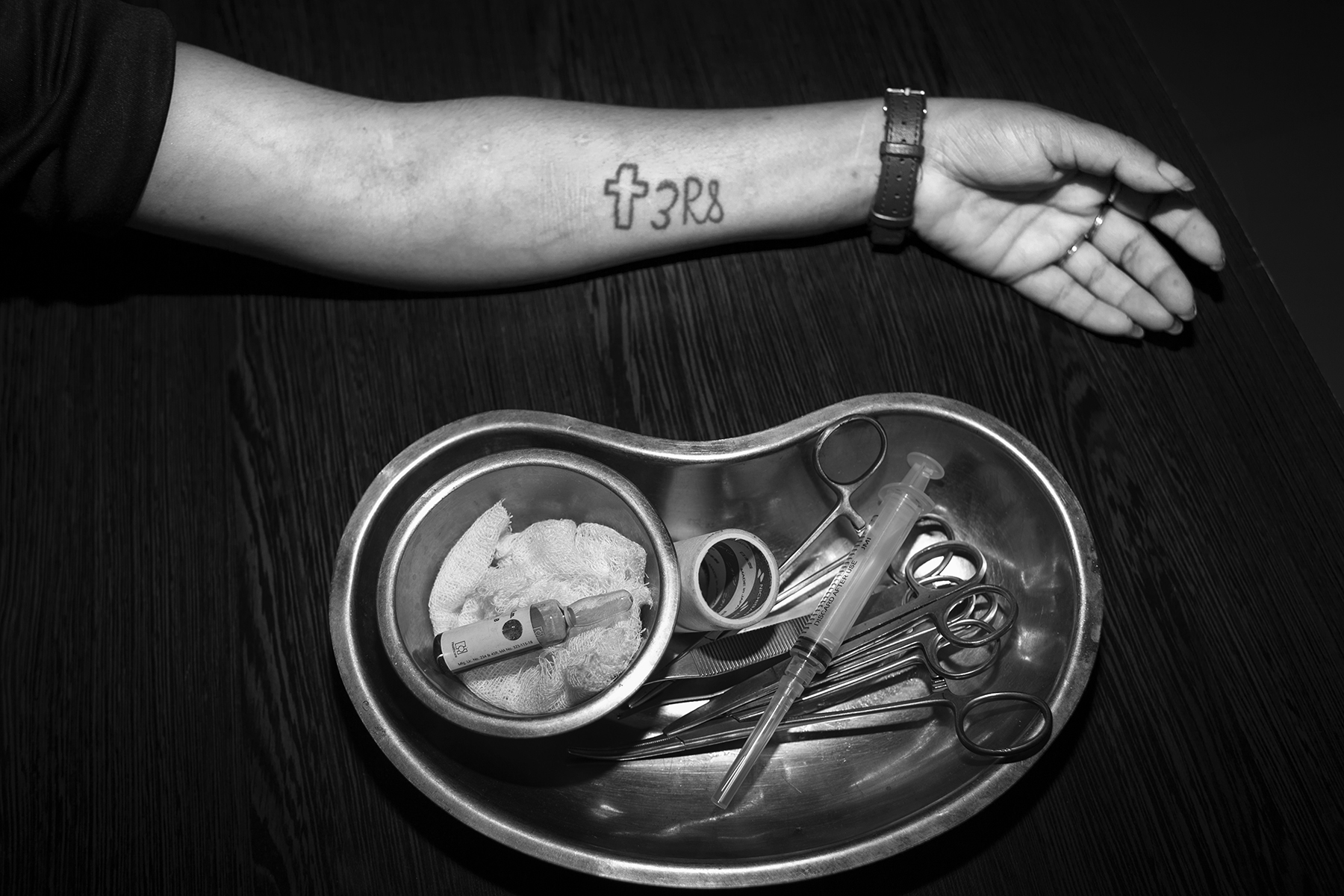
Ripa Francisco Gomez (41), a nurse and wounded fighter of the July 2024 Revolution against Hasina’s 16-year authoritarian rule, became a target while aiding injured female protesters. A BGB soldier shot her at close range, sending 43 metal fragments into her chest, stomach, face, lips, hands, and eyes, with one piercing her right eye and lodging in her brain. None could be removed, leaving her blind in the right eye and with blurred vision in the left. She lost her job and was abandoned by her partner. With no family, home, or relatives, Ripa now stands entirely alone. A tattoo on her hand—a cross symbolizing Jesus Christ, her birth date, the first letter of her name, and the initial of a former lover—tells the story of a life once full of hope.
Despite illness, disability, poverty, and betrayal, Francisco has built a family among her students. She teaches young women at her own expense, provides accommodation, and runs the Self Home Service and Learning Institute to train poor students as nurses for hospitals and home care. Through her institute, she also offers home care services, humanitarian education programs, and employment opportunities. In the end, Ripa Francisco Gomez has become her own source of inspiration—living proof of resilience amid relentless hardship. This image, taken on 20 March 2025 in Badda, Dhaka, Bangladesh.
08 The New freedom fighters of Bangladesh 2024
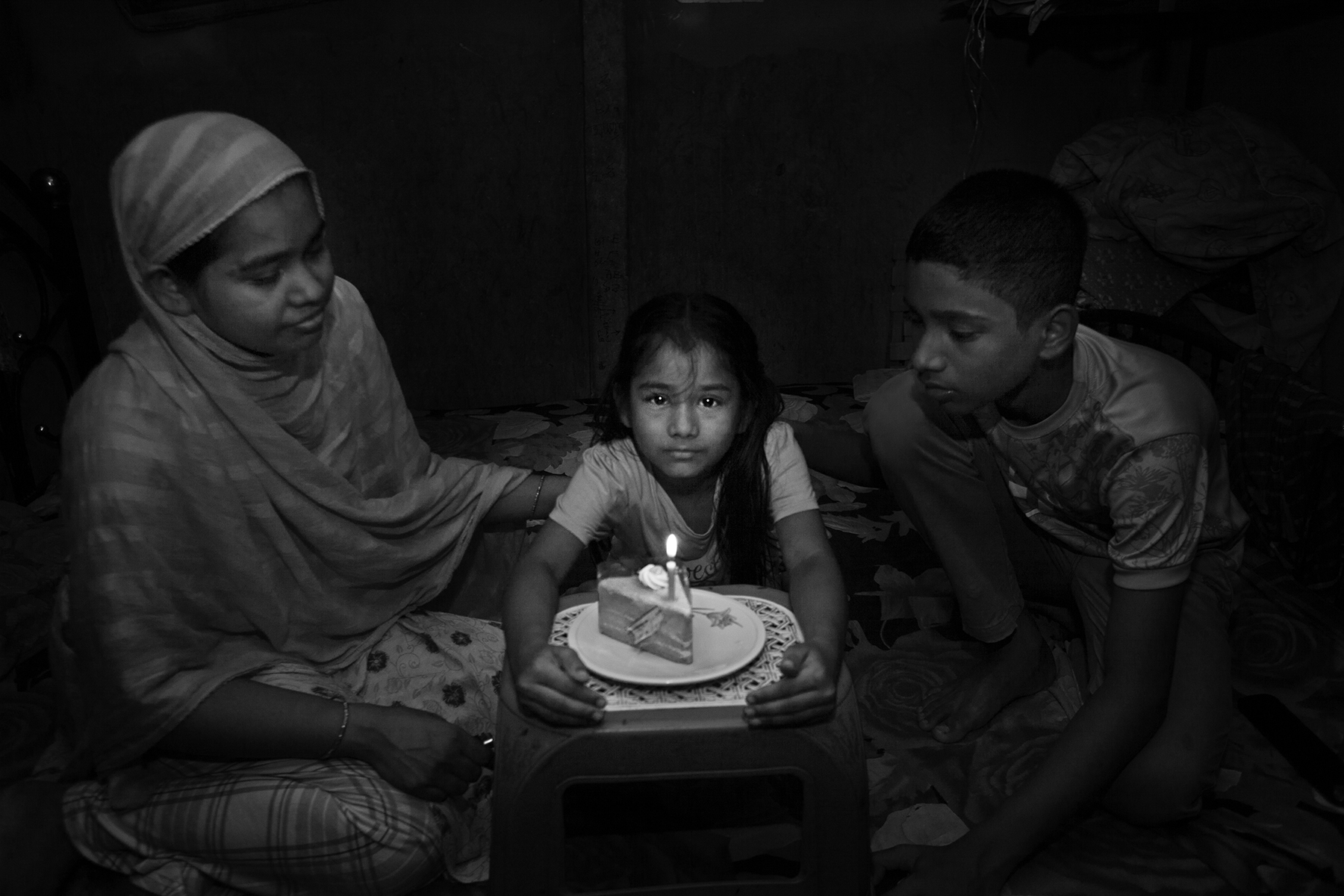
29 October 2024 marked the birthday of Faria Akhtar, daughter of July 2024 mass uprising martyr Mohammad Faruk. Amidst countless hardships, the family tried to find a moment of joy, and Faria’s birthday seemed to bring that occasion. But could daddy’s beloved daughter truly celebrate without him? For a while, all seemed well, until emotion overwhelmed her. Missing her martyred father deeply, her eyes welled with tears. Eventually, she hid her face and cried. Faria has now turned seven and will begin class 1 next year. This poignant photo was taken on 29 October 2024 at Tankir Pahar, Lalkhan Bazar, Chittagong, Bangladesh, capturing the tender grief of a child who has lost her father.
09 The New freedom fighters of Bangladesh 2024
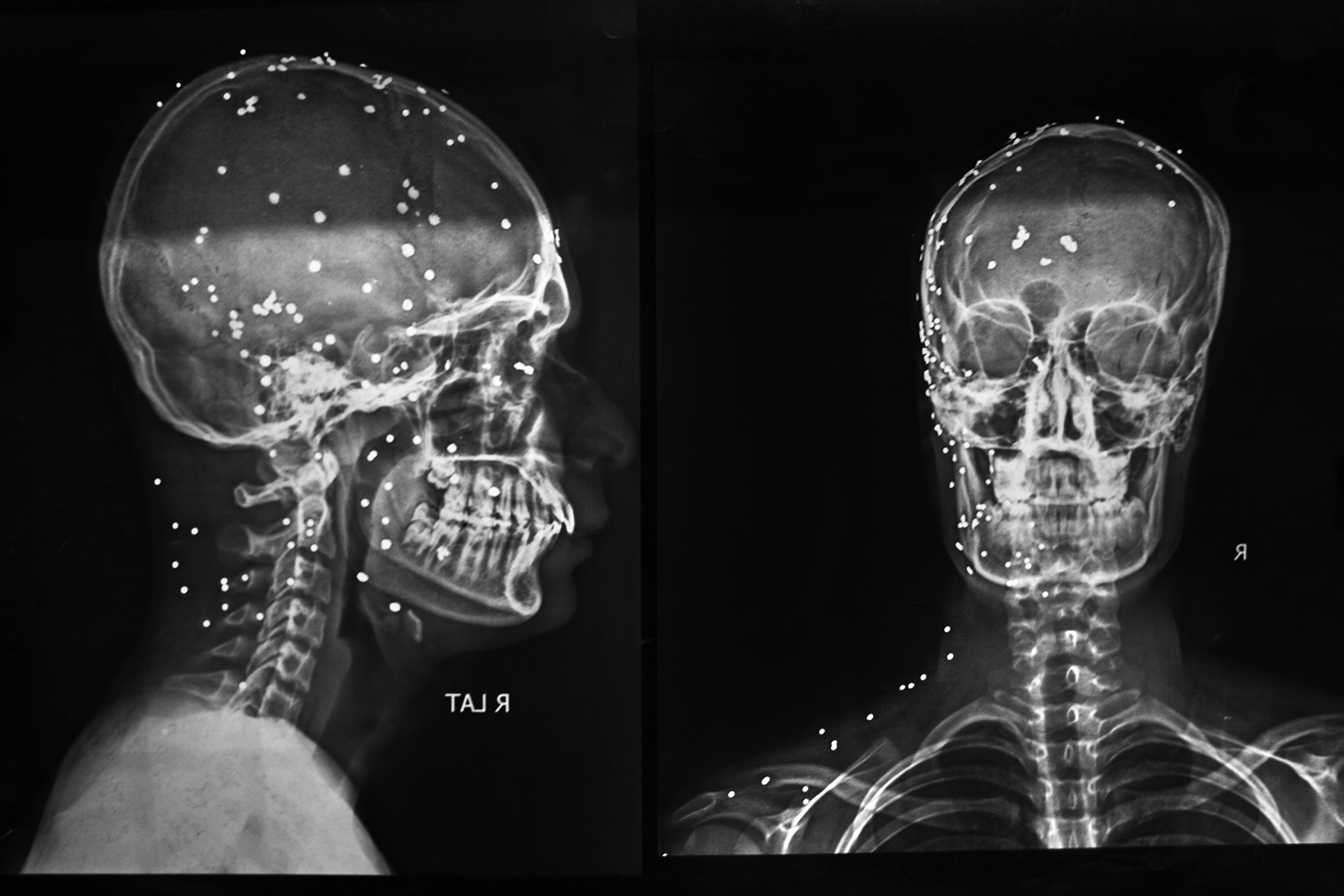
Shahedul Islam Shakib, 22, a Feni Government College student, was brutally injured by police on August 5 in Feni. His left eye was destroyed and later removed, and his body contains over 450 pellets, with only seven removed; more than 150 remain in his head. Shakib, who participated in the movement daily from the start, was injured on three separate days, demonstrating his unwavering commitment despite his injuries.
On July 17 in Feni, Shahedul Islam Shakib’s left arm was broken by the ruling party’s student wing, the Chhatra League. After recovering, he rejoined protests on July 29. On August 4, his body was struck by numerous pellets. Despite his injuries, he returned on August 5, joining celebrations when Prime Minister Sheikh Hasina fled to India. During the ensuing chaos as protesters pursued police, Shakib was shot indiscriminately. He has been receiving treatment at Dhaka’s National Institute of Ophthalmology & Hospital (NIOH) for a year.
The image shows an X-ray of his head, with the dots representing the small bullets (pellets) embedded in his skull. This photo was taken on 21 March 2025, National Institute of Opthalmology & Hospital (NIOH) in Dhaka, Bangladesh.
10 The New freedom fighters of Bangladesh 2024
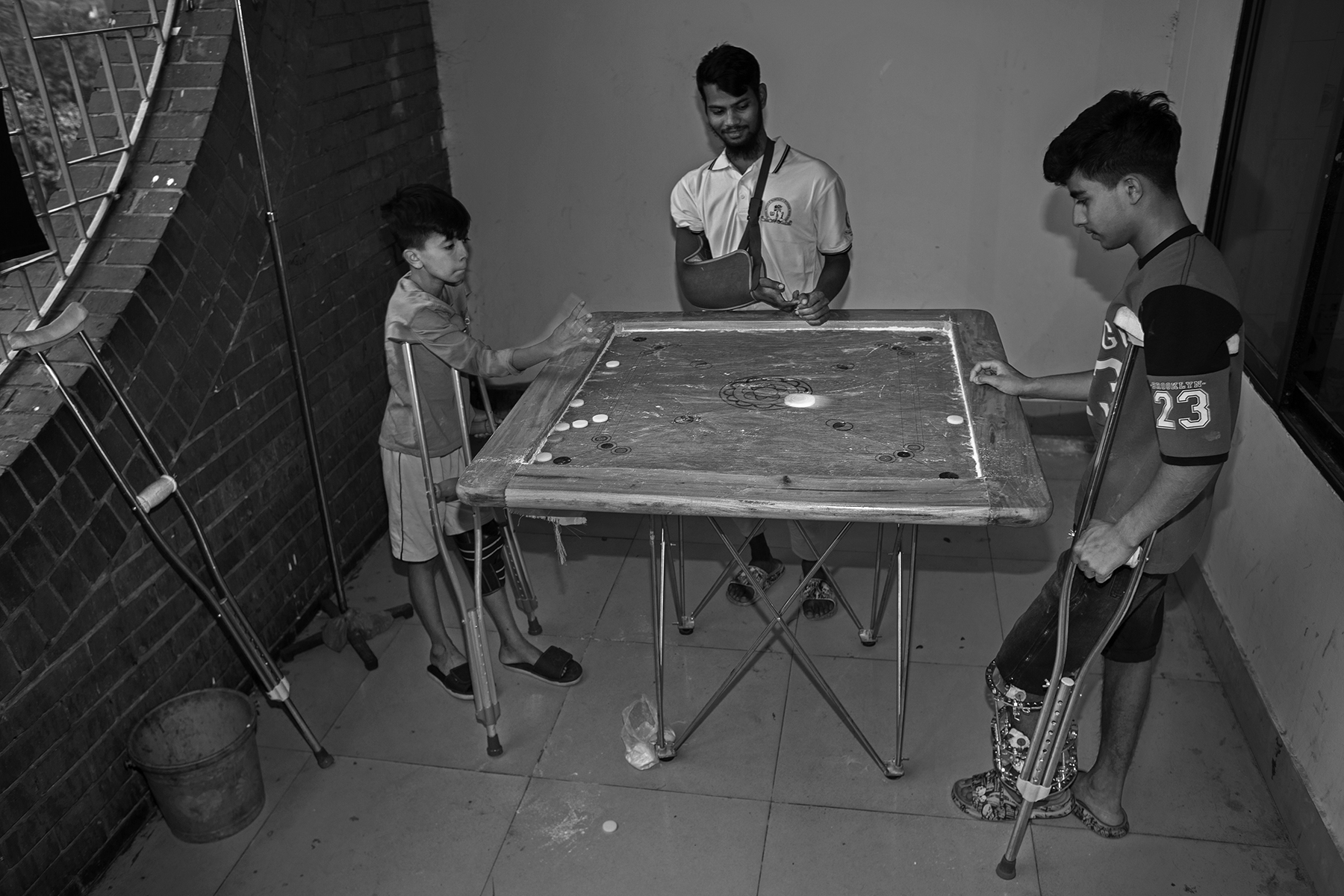
Bloody July of 2024 in Bangladesh; during the mass movement of students & public against discrimination & the subsequent mass uprising against the authoritarian Hasina government, among the children injured by police firing, 11-year-old Rabiul (left) & 16-year-old Shaheen Alam (right) are seen playing carrom board on the hospital (NITOR) balcony. They have been undergoing treatment for 5 months in the hospital, which has become their home.
Rabiul Rabiul (11), a sixth-grader from Dhaka Model School, was shot in both legs during the July 19 mass movement in Mirpur, Dhaka. A bullet shattered the joint plate in his left leg. His treatment is ongoing, and doctors say he’ll need surgery at age 25. He now lives in a rented home in Mirpur; his father is a driver. Shaheen Alam (16), a ninth-grader from Mymensingh, was shot on August 5 in front of Azimpur Police Station, Uttara. His left leg was left boneless. Doctors say recovery will take a long time if the bone regenerates. His father is a rickshaw puller in Dhaka. Both boys have stopped their studies due to their injuries.
This photo was taken on 24 December 2024, “National Institute of Traumatology and Orthopedic Rehabilitation (NITOR)” Hospital in Dhaka, Bangladesh.
11 The New freedom fighters of Bangladesh 2024
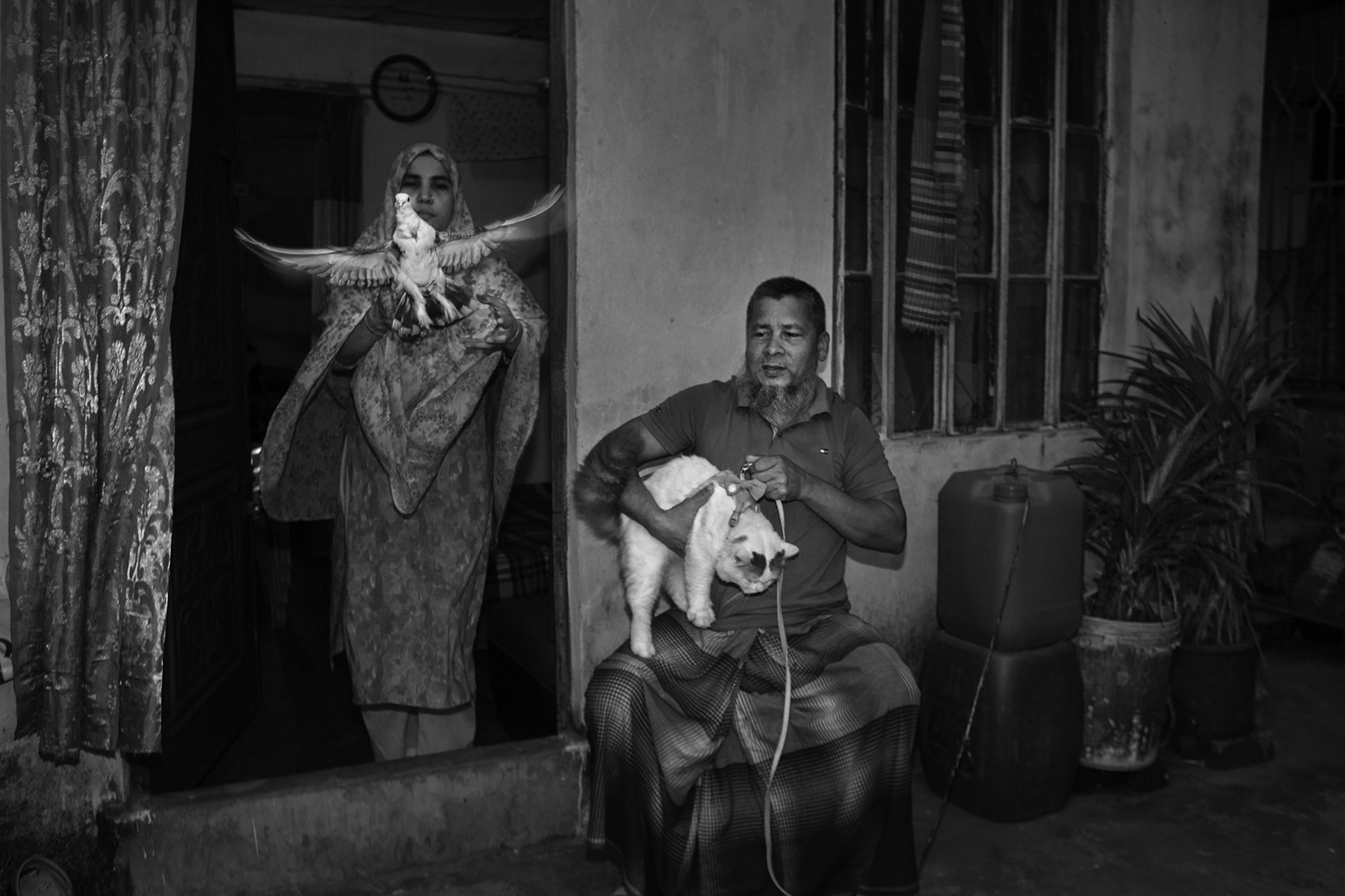
Faisal Ahmed Shanto (19), a martyr of the July 2024 uprising, is fondly remembered by his parents, Kohinoor Akhtar (42) and Mohammad Zakir Hossain (48), for his love of roosters, pigeons, and cats. Months before his martyrdom, he told his father, “Quota holders get jobs, but nothing has changed despite our protests since 2018. I want to start a goat farm.” His words reflect the struggles of millions of students, linking the 2018 safe road movement to the 2024 anti-quota protests and the subsequent July uprising. Faisal was a first-year BBA student at MES College, Chittagong, and the only son in his family, with one younger sister. This photo was taken on 29 October 2024, Lalkhan Bazar, Chittagong, Bangladesh.
12 The New freedom fighters of Bangladesh 2024
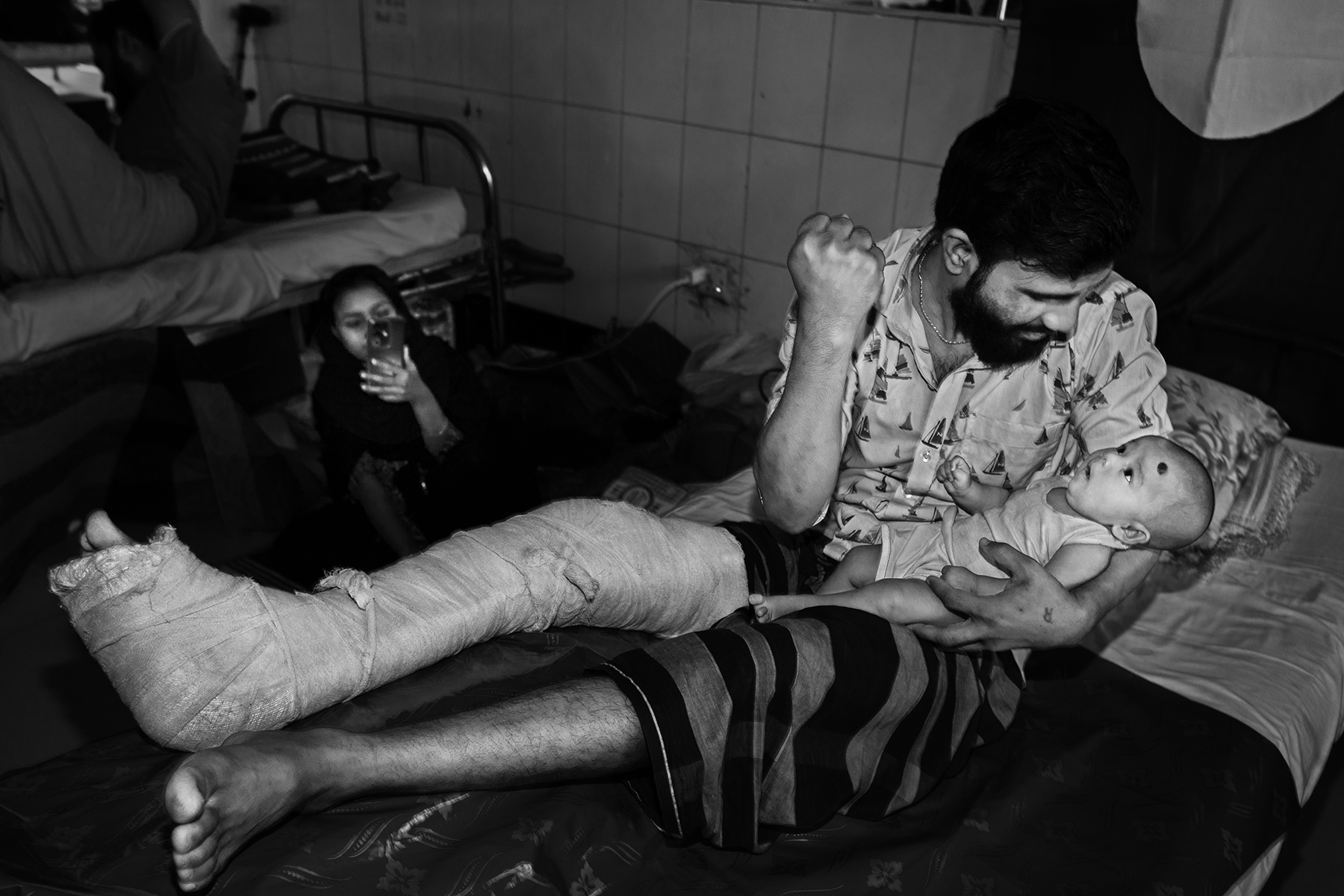
Mohammad Rumen Mia (27), was critically injured on July 19, 2024, when police fired at close range during protest at Sonir Akhra in Jatrabari, Dhaka. Multiple bullets shattered his right leg. After five surgeries at the National Institute of Traumatology and Orthopedic Rehabilitation (NITOR) in Dhaka, his leg remains without bone—his future uncertain. Amid this pain, a ray of hope emerged. On January 23, 2025, while still hospitalized, his wife gave birth to their daughter, whom he named Mehazabin. With no income and a family in crisis, this newborn became his only source of strength. For her, he must endure.
In this photograph, taken on 29 March 2025 at NITOR, Rumen gently shares the spirit of the revolution with his daughter. She watches him in quiet wonder—as if sensing the weight of his sacrifice. Though too young to fully understand, her eyes reflect a connection to his struggle, a silent acknowledgment of her father’s bravery. In her gaze, he finds the will to keep fighting—not just for justice, but for her future.